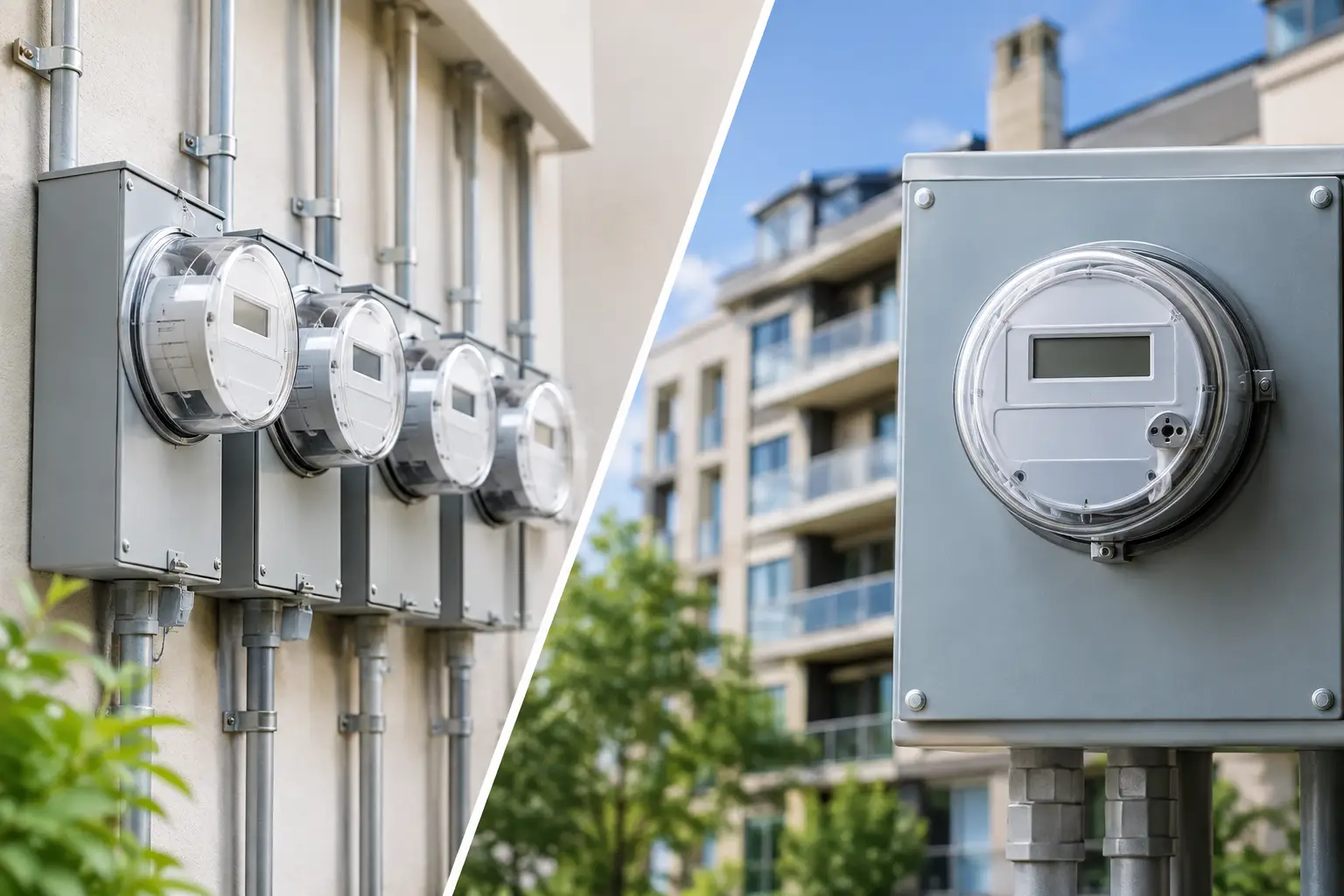

If your utility costs keep rising but your maintenance team cannot point to a single obvious problem, benchmarking is where the guesswork should stop. This guide to multifamily energy benchmarking is built for owners and property managers who need a clear way to measure building performance, compare sites fairly, and decide where retrofit dollars will produce the best return.
What multifamily energy benchmarking actually does
At its core, benchmarking compares a building’s energy use over time and against similar properties. For multifamily owners, that matters because raw utility bills rarely tell the full story. A 200-unit property with strong occupancy and older mechanical systems may look expensive to operate, but the real question is whether it is underperforming relative to buildings with a similar size, use pattern, and climate.
Benchmarking gives you that context. It organizes energy data into usable metrics such as energy use intensity, cost per unit, and trends by month or season. When done correctly, it shows whether a property has a billing issue, an operations issue, an equipment issue, or simply a building that performs as expected for its age and configuration.
That distinction matters. Without it, owners often spend money on upgrades that sound efficient but do not address the main source of waste.
A guide to multifamily energy benchmarking starts with the right data
The quality of your benchmark depends on the quality of your inputs. Many multifamily portfolios have fragmented records, mixed meter setups, and gaps in tenant-paid utility data. That does not make benchmarking impossible, but it does mean the process needs discipline.
Start with 12 consecutive months of utility data at a minimum. Twenty-four months is better because it helps separate one-time anomalies from recurring problems. Include electricity, natural gas, district energy, and any other major fuel source used in the property. You also need basic building facts such as gross square footage, number of units, occupancy, common area details, and the presence of major energy systems like central HVAC, domestic hot water plants, corridor ventilation, laundry facilities, and parking garage exhaust.
Meter configuration is one of the biggest variables in multifamily properties. Some buildings are master metered. Others split common area usage from in-unit usage. Some have partial submetering that captures only certain loads. The benchmark should reflect what the owner can actually influence, but it should also acknowledge what is outside management’s control. A property with high tenant plug loads may benchmark differently than one where central systems dominate total usage.
This is why apples-to-apples comparisons can be harder in multifamily than in office or retail buildings. The answer is not to skip benchmarking. The answer is to document the building carefully so the results can be interpreted correctly.
The metrics that matter most
Owners and managers do not need a report full of disconnected numbers. They need metrics that support decisions.
Energy use intensity, or EUI, is often the starting point because it converts total annual energy consumption into a per-square-foot measure. That helps normalize for building size. Cost per unit and cost per occupied unit are also useful in multifamily settings because they connect energy performance to operating budgets and occupancy realities.
Weather-normalized usage is another important metric. A mild winter or unusually hot summer can distort year-over-year comparisons. If you do not adjust for weather, you may mistake a climate swing for an operational improvement.
For larger portfolios, ranking properties by performance quartile can be more helpful than looking at each building in isolation. The lowest-performing sites usually deserve immediate attention, but the middle tier is often where the best return exists. The worst building may need capital-intensive work. The middle performer may respond quickly to controls, air sealing, lighting, or domestic hot water improvements.
Where benchmarking often goes wrong
The most common mistake is treating benchmarking as a compliance exercise instead of an operating tool. If the goal is just to submit numbers to satisfy a local requirement, the result is usually a report that gets filed and forgotten. That approach misses the financial value.
Another common issue is bad scope definition. If one year includes common area electric bills and the next year does not, the trend line is not reliable. If occupancy drops sharply but the building is compared to a prior year without adjustment, the benchmark may look better even though system efficiency has not improved.
There is also a timing problem in many portfolios. Owners benchmark only after costs spike. That is understandable, but reactive benchmarking limits options. If you benchmark annually and review results with intent, you can identify drift before it becomes a budget problem.
Finally, some teams rely too heavily on generic peer comparisons. Benchmarking against a national average can be useful, but it should not replace asset-specific analysis. A garden-style community in a warm climate is not directly comparable to a mid-rise building with central hot water and enclosed corridors in a cold region.
How to turn benchmarking into action
A strong benchmark should lead to a short list of practical next steps. That is where owners start seeing value.
First, identify whether the issue is operational or capital-related. If a property’s usage profile suggests systems are running too long, controls, scheduling, and maintenance corrections may solve a large share of the problem. If base load stays high year-round and equipment is outdated, deeper retrofit measures may be justified.
Second, separate quick wins from longer-term investments. LED lighting in common areas, ventilation scheduling, boiler reset adjustments, and water-saving measures can often be implemented quickly. Envelope improvements, HVAC replacement, or central plant upgrades take more planning but may deliver stronger long-term savings.
Third, use benchmarking to prioritize sites across the portfolio. Not every building should be treated the same way. A property with moderate underperformance and stable occupancy may be the best candidate for immediate retrofit work because savings are easier to capture and verify. Another site may need a more detailed audit before any capital decision is made.
This is where technically informed retrofit partners add real value. Good benchmarking does not end with a score. It points to measurable improvements, expected savings, and a path to execution.
Benchmarking and resident experience
Energy benchmarking is often discussed as an owner-side financial tool, but it also affects resident satisfaction. Buildings with poor energy performance frequently have comfort complaints hiding in the background. Uneven heating, inconsistent hot water, overventilated corridors, and excessive humidity are not just efficiency issues. They are service issues.
That said, the relationship is not always simple. Lower energy use is not the goal if it comes at the expense of comfort or indoor air quality. The right approach improves performance while maintaining livability. In multifamily buildings, that balance matters because operational changes affect many households at once.
Owners should view benchmarking as part of broader building performance management, not as a standalone sustainability metric. Lower bills matter. So do comfort, retention, and asset reputation.
When outside support makes sense
Some portfolios have the internal capacity to gather utility data, normalize it, and interpret the results. Many do not. Multifamily energy data can be messy, especially when properties have mixed fuel types, decentralized systems, or multiple utility providers.
Outside support becomes valuable when the organization needs more than a spreadsheet. If you want benchmarking tied directly to retrofit planning, savings projections, and implementation, technical expertise matters. The strongest partners can connect the numbers to building systems, identify realistic improvements, and stand behind performance outcomes.
For owners managing several communities or preparing for capital planning, that can shorten the path from analysis to savings. Performance Energy works with property owners and program stakeholders in exactly that results-driven way, turning building data into practical retrofit opportunities with measurable impact.
What a successful benchmarking program looks like
A successful program is consistent, not complicated. It uses complete data, applies the same methodology across reporting periods, and turns findings into decisions. It also recognizes that not every variance demands a major project. Sometimes the fix is maintenance discipline. Sometimes it is controls. Sometimes the building needs real capital improvement.
The point is clarity. You should know which properties are performing well, which are slipping, and which deserve immediate attention. You should also know whether your next dollar is better spent on diagnostics, operational changes, or a targeted retrofit.
That is the practical value of benchmarking in multifamily housing. It replaces assumptions with evidence and helps owners move toward lower utility costs, stronger building performance, and better-informed investment decisions. Start with clean data, stay honest about building differences, and use the results to act while there is still time to improve the numbers that matter.