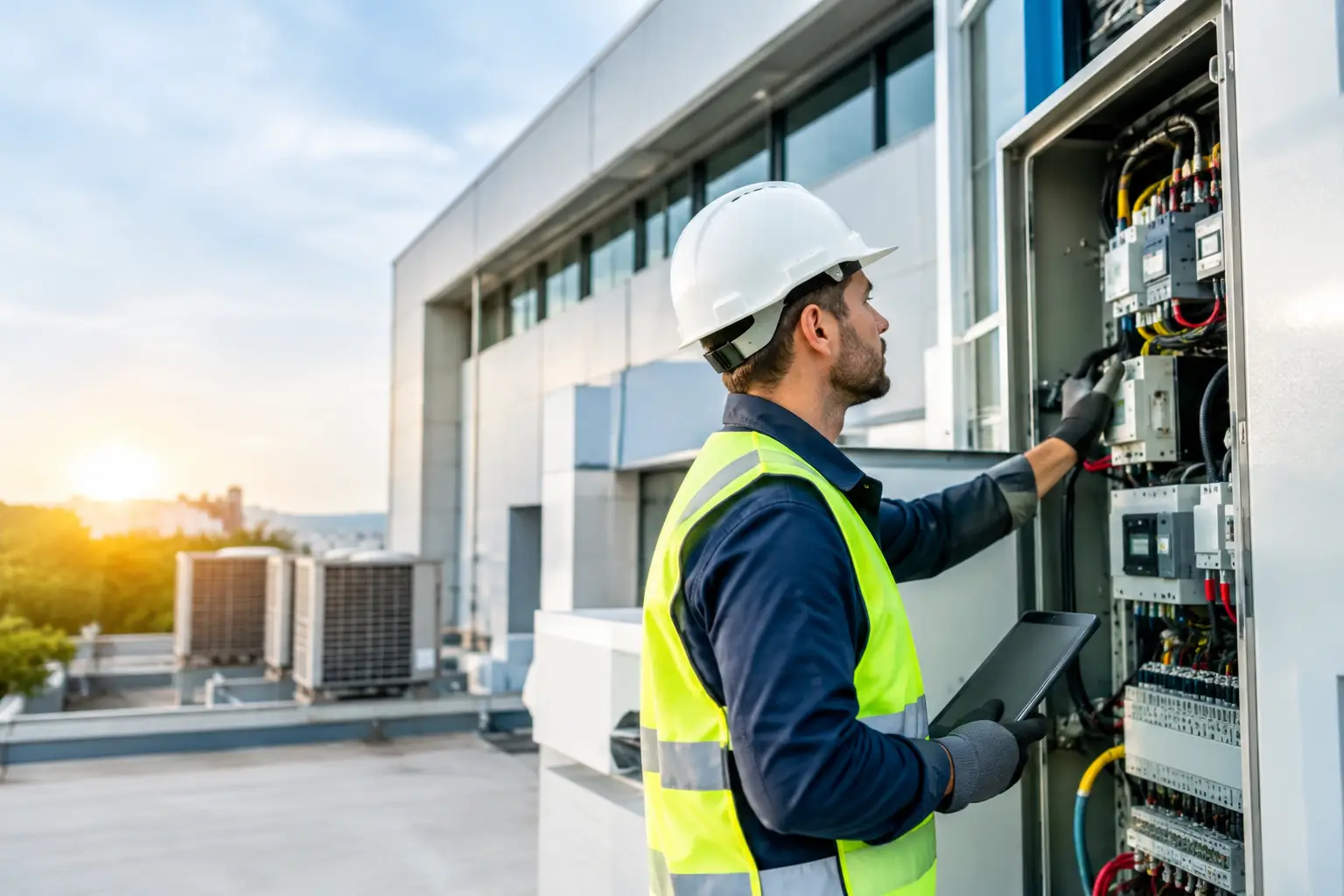

A rental property that runs hot in summer, drafts in winter, and produces unpredictable utility bills is more than a tenant complaint issue. It is an operating performance issue. Energy upgrades for rental properties address that problem at the building level, where waste usually starts, and they do it in a way that can lower costs, improve comfort, and strengthen long-term asset performance.
For owners and managers, the challenge is rarely whether efficiency matters. It is deciding which upgrades will actually pay off, which ones tenants will notice, and which ones create measurable results instead of surface-level improvements. The right retrofit strategy is not about replacing everything at once. It is about targeting the parts of the building that drive energy loss and fixing them in the right order.
Why energy upgrades for rental properties matter
In a rental setting, energy waste affects more than one line item. If the owner pays utilities, inefficiency directly increases operating expenses. If tenants pay utilities, high bills can still hurt occupancy, renewals, and resident satisfaction. In both cases, uncomfortable units, inconsistent temperatures, and moisture issues often trace back to the same underlying performance problems.
That is why effective upgrades should be viewed as building performance improvements, not isolated product purchases. A new appliance may help, but if the property has uncontrolled air leakage, poor insulation, or outdated HVAC equipment, the savings will be limited. Buildings work as systems. When one weak point is ignored, the rest of the investment can underperform.
There is also a portfolio-level reason to act. Rising energy costs, tighter expectations around sustainability, and increasing pressure to control operating expenses have made efficiency a business decision, not a nice-to-have. Owners who improve performance now are usually in a better position to manage costs and protect value over time.
Start with the upgrades that affect the whole building
The most valuable energy upgrades for rental properties are often the least visible. Air sealing, insulation improvements, duct sealing, and HVAC optimization do not always stand out during a walk-through, but they often produce the strongest building-wide impact.
Air leakage is one of the most common sources of waste in existing properties. Conditioned air escapes through gaps around penetrations, attics, doors, windows, and wall assemblies. That forces heating and cooling systems to work harder and makes units less comfortable. Sealing those leaks can reduce unnecessary load and help stabilize indoor temperatures.
Insulation should be considered next, especially in attics, crawl spaces, and exterior walls where practical. Insulation does not create savings on its own if air is moving freely through the building envelope, which is why sequence matters. Seal first, then insulate where the building needs it most.
HVAC is another major opportunity. Older systems often consume more energy than necessary and may struggle to maintain comfort evenly across units. In some properties, full replacement makes sense. In others, better controls, duct improvements, calibration, or targeted system upgrades produce a stronger return. The answer depends on system age, maintenance history, climate, and how the property is operated.
Lighting and water heating also deserve attention, but they should not automatically take priority over envelope and HVAC issues. LED lighting is a smart move in common areas and units, and water heating upgrades can create meaningful savings, especially in multifamily buildings. Still, if the property is leaking conditioned air everywhere, those measures alone will not solve the bigger performance problem.
What makes a rental property retrofit cost-effective
Cost-effective does not always mean cheapest upfront. It means the investment produces dependable savings, fewer comfort complaints, and stronger operational control over time.
For single-family rentals, the best retrofit plan often focuses on a manageable set of high-impact measures. Air sealing, attic insulation, HVAC tuning or replacement, and efficient water heating can significantly reduce waste without turning the property into a major construction project. If turnover is approaching, that is often the best window to complete the work with less disruption.
For multifamily properties, the calculation is broader. Owners need to consider unit count, common-area energy use, central systems, maintenance patterns, and tenant coordination. A measure that looks modest on one unit can become highly valuable across an entire building. The opposite is also true. A premium upgrade with high unit-by-unit installation costs may look attractive on paper but deliver weaker returns at scale.
This is where technical assessment matters. Good retrofit planning should account for building age, construction type, occupancy patterns, utility structure, and current equipment performance. Without that, owners can end up spending capital on visible upgrades while the largest sources of energy loss remain untouched.
Tenant-paid versus owner-paid utilities changes the strategy
One of the biggest variables in rental retrofits is who pays the utility bill.
In owner-paid buildings, the savings case is usually straightforward. Lower consumption reduces operating expenses, and the return can often be measured directly against utility costs. In tenant-paid buildings, the benefits are more distributed. Lower bills can improve marketability and tenant satisfaction, while better comfort can support retention and reduce complaints.
That does not make tenant-paid properties a weaker case for retrofits. It just means owners should look at the full value of the upgrade. Reduced turnover, better unit livability, less strain on equipment, and improved building condition all have financial value even when utility savings do not flow directly to the owner.
There is also a reputational factor. Prospective tenants increasingly notice whether a unit feels efficient and comfortable. A property that stays consistent through extreme weather and keeps monthly bills more predictable has a real leasing advantage.
Common mistakes with energy upgrades for rental properties
The most common mistake is treating efficiency as a product checklist instead of a performance strategy. Replacing windows before addressing major attic leakage, installing high-efficiency HVAC without fixing duct losses, or choosing equipment based only on advertised efficiency ratings can lead to disappointing results.
Another mistake is underestimating the operational side of retrofit work. Rental properties are occupied, scheduled, and managed assets. Upgrades need to fit tenant access, maintenance workflows, and turnover timing. A technically sound recommendation can still fail if it is difficult to implement across a live property.
There is also the issue of fragmented decision-making. Lighting gets handled by one vendor, HVAC by another, insulation by a third, and no one is accountable for overall building performance. That often leads to missed interactions between systems and no clear measurement of outcomes.
Owners should also be cautious about one-size-fits-all recommendations. The right plan for a garden-style apartment complex in a hot climate will not look the same as the right plan for a single-family rental in a mixed climate region. Good retrofit decisions are specific to the property.
How to prioritize upgrades without overcapitalizing
The best approach is usually phased, but intentional. Start with an assessment that identifies the largest sources of energy loss and the best opportunities for measurable savings. From there, group improvements into logical stages.
Stage one often includes low-disruption, high-impact work such as air sealing, insulation improvements, lighting, controls, and system tuning. Stage two may involve HVAC replacement, water heating upgrades, or broader common-area improvements. Stage three can address longer-horizon capital items as equipment reaches end of life.
This kind of sequencing helps owners avoid overcapitalizing early while still moving the property toward better performance. It also makes budgeting easier and allows results from the first phase to inform the next step.
For larger portfolios, standardization can help. When similar properties share construction characteristics and system types, upgrade packages can often be repeated with more predictable cost and savings outcomes. That matters for owners and program partners who need scalable results, not just isolated wins.
Execution matters as much as the recommendation
A retrofit plan is only as strong as its implementation. Energy savings are created in the field, through quality installation, verified performance, and accountability for results. That is especially true in occupied rental environments, where poor execution can create tenant disruption without delivering meaningful savings.
Owners should expect more than a list of suggestions. They should expect a process that connects assessment, scope development, installation quality, and measured performance. That is where experienced retrofit specialists stand apart. The technical side matters, but so does the ability to execute cleanly, coordinate across stakeholders, and deliver outcomes that hold up after the work is complete.
For property managers, that kind of accountability reduces uncertainty. For utility and energy program partners, it supports measurable demand reduction and stronger program performance. For owners, it means capital is being deployed toward verified building improvements, not guesswork.
Performance Energy approaches retrofit work with that standard in mind: targeted upgrades, technically informed execution, and a focus on guaranteed results that translate into lower energy use and lower operating costs.
The smartest rental property upgrades are not always the most visible ones. They are the ones that make the building work better every day – for the owner reviewing utility spend, for the manager handling comfort complaints, and for the tenant deciding whether to renew.