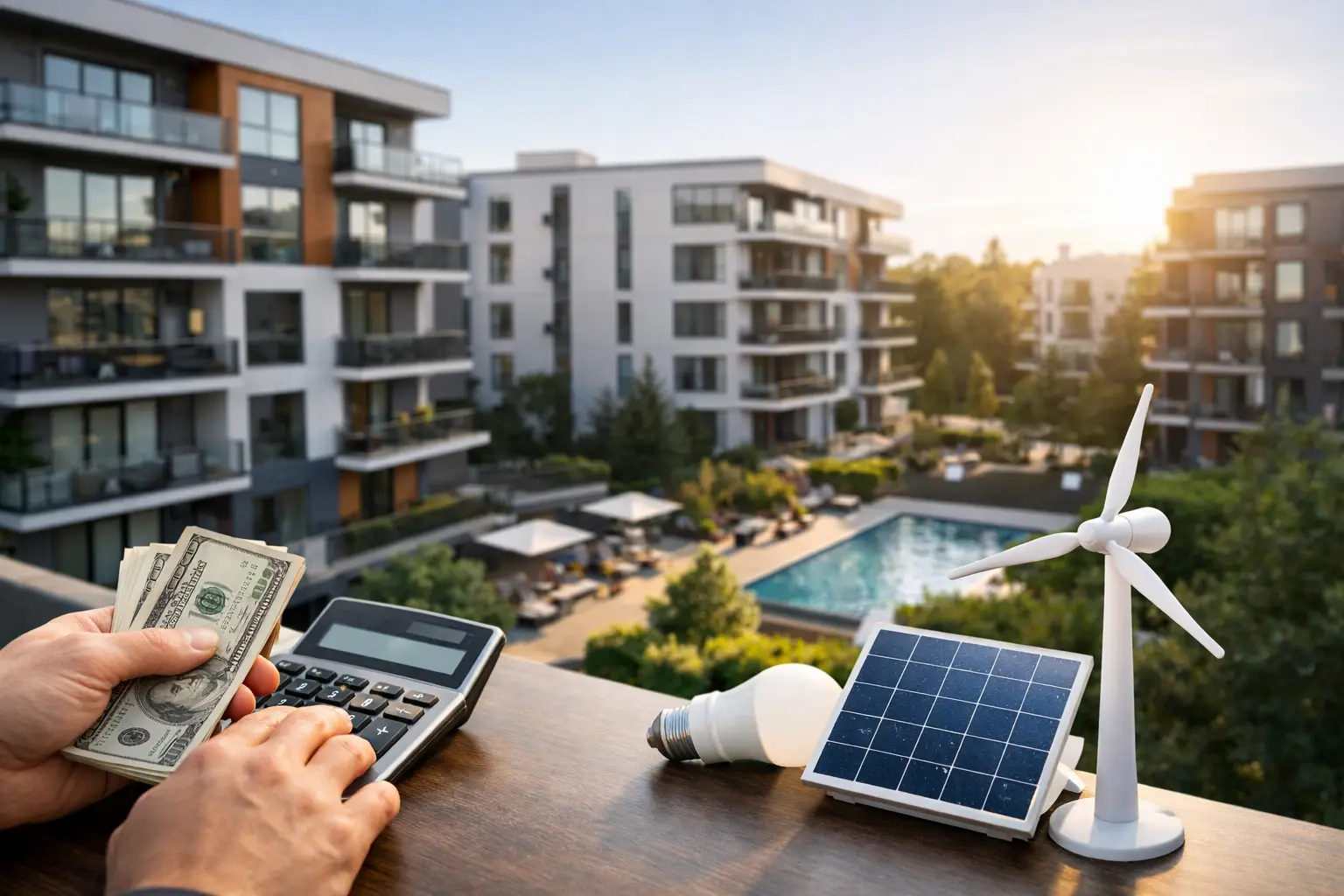
When utility expenses climb faster than rent growth, margins get squeezed from both sides. For owners and operators trying to reduce utility costs apartment complex performance is often the missing lever – not just rates, resident behavior, or weather. The biggest savings usually come from fixing how the building actually uses energy and water every day.
That matters because most multifamily properties do not have one big failure. They have dozens of smaller ones: aging lighting, leaking fixtures, poorly balanced HVAC systems, weak insulation, inefficient ventilation, and equipment that still works but costs too much to run. If you address those issues in the right order, utility costs can come down without sacrificing resident comfort or operational reliability.
Where apartment complexes lose money on utilities
In multifamily buildings, waste tends to hide in plain sight. Common area lighting may run longer than needed. Corridor HVAC may be conditioning spaces that are empty for most of the day. Domestic hot water systems often operate at higher temperatures or longer schedules than necessary. Laundry rooms, pool equipment, exhaust fans, and make-up air systems can quietly add thousands of dollars a year to operating costs.
Inside the units, the problem is often cumulative. An older toilet flapper, a showerhead that uses more water than it should, a refrigerator near the end of its efficient life, or air leakage around doors and windows may not look urgent in isolation. Across 50, 100, or 200 units, those losses become a meaningful budget issue.
This is why broad assumptions rarely work. Two apartment complexes built in the same decade can have very different utility profiles depending on occupancy patterns, maintenance history, climate zone, and how previous upgrades were installed. The right path starts with the actual building, not a generic checklist.
How to reduce utility costs in an apartment complex without guesswork
The fastest way to waste capital is to upgrade the wrong thing first. A property may replace light fixtures and see modest savings, while the larger issue is an inefficient central hot water system or a building envelope that forces HVAC equipment to work harder than it should. Effective cost reduction depends on sequencing.
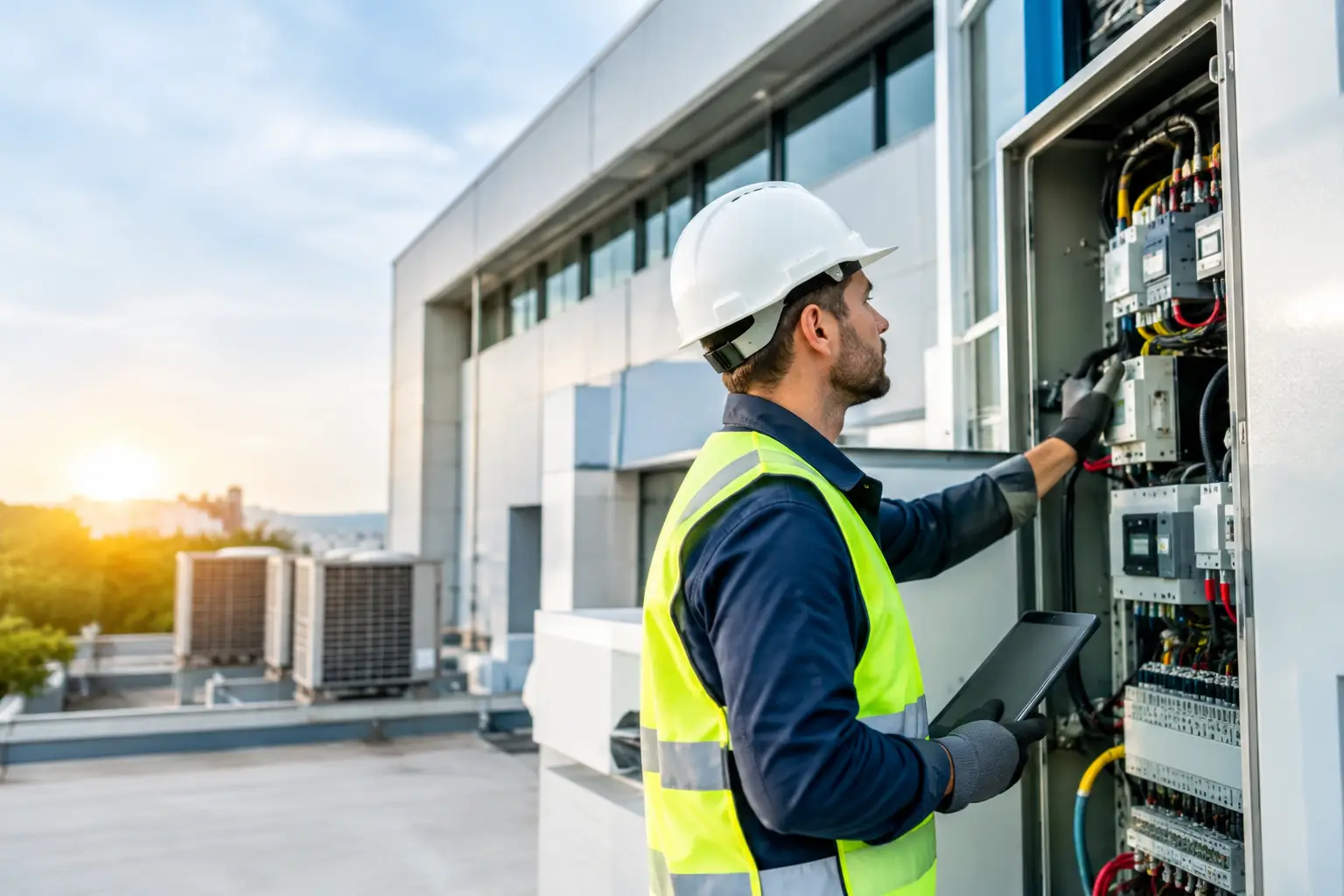
A sound approach begins with utility data, equipment condition, and on-site inspection. Billing history helps identify where usage spikes, whether consumption is stable or drifting upward, and how seasonal loads behave. A field review shows what the numbers cannot – failed dampers, poor airflow, duct leakage, insulation gaps, control settings, and equipment that is operating outside design intent.
From there, the work should focus on measures with measurable payback and dependable performance. That usually means balancing immediate savings with longer-term building improvements. Some fixes are low cost and quick to implement. Others require more capital but produce deeper savings and stronger asset performance over time.
Lighting and controls
Lighting is still one of the simplest opportunities, especially in common areas, parking structures, stairwells, and exterior spaces. LED retrofits lower wattage and often reduce maintenance calls because lamps last longer. Adding occupancy sensors, photocells, and scheduling controls pushes savings further by cutting runtime instead of only reducing fixture load.
The trade-off is that not every lighting retrofit is equally valuable. If a property has already converted most high-use areas to LED, the next savings may be marginal. In that case, it makes more sense to look at HVAC, hot water, or building shell issues before spending more on lighting.
Water and hot water systems
Water savings are often underestimated in apartment complexes because they affect both water and energy costs. Low-flow showerheads, aerators, and high-efficiency toilets reduce direct water use, but they also reduce the energy required to heat domestic hot water. In a large building, that combined impact can be significant.
Hot water recirculation systems are another common source of waste. Poorly controlled pumps, uninsulated piping, or excessive setpoints can drive up costs without improving service to residents. Right-sizing equipment, improving controls, and insulating distribution lines can lower costs while maintaining hot water availability.
Properties with central boilers or older water heating systems may have deeper retrofit potential. Still, replacement is not always the first move. In some cases, repairs, controls optimization, or distribution improvements deliver better short-term returns than full equipment turnover.
Reduce utility costs apartment complex owners control through HVAC upgrades
HVAC is often the largest energy expense in multifamily buildings, especially where common areas, leasing offices, clubhouses, and central systems are involved. Even in individually metered properties, poor HVAC performance affects comfort complaints, turnover risk, and overall building reputation.
The most common issue is not that equipment has failed completely. It is that systems are drifting. Filters are dirty, refrigerant charge is off, airflow is unbalanced, thermostats are inaccurate, economizers are disabled, and controls are working against occupancy patterns. Those problems increase runtime and reduce comfort at the same time.
Targeted HVAC retrofits can include higher-efficiency equipment, variable speed motors, smart thermostats in eligible applications, duct sealing, zoning adjustments, and ventilation corrections. The right mix depends on the building type. Garden-style properties often have different opportunities than mid-rise or high-rise assets with central plant equipment.
There is also a practical management question here: when do you repair, and when do you replace? If a unit is near end of life and requires frequent service, replacement often makes sense because it addresses both maintenance cost and energy waste. If equipment is still structurally sound, a tune-up and controls adjustment may provide a better return in the near term.
The building envelope matters more than many owners think
If conditioned air escapes through attic bypasses, wall penetrations, poorly sealed doors, or aging windows, HVAC upgrades alone will underperform. Air sealing and insulation improvements are less visible than new equipment, but they often produce durable savings because they reduce the load the system has to meet every hour.
They also improve resident comfort. Drafty units, hot top-floor apartments, and cold perimeter rooms often lead to thermostat overrides, space heater use, or open windows while heating or cooling is running. Those behaviors are symptoms of building performance problems, not just resident preferences.
Operational changes that cut waste without hurting service
Not every improvement requires major capital. In many apartment complexes, utility costs come down when operations become more intentional. Common area temperature setpoints, pool pump schedules, exhaust fan runtimes, irrigation controls, and after-hours lighting schedules are all worth reviewing.
Submetering or better consumption tracking can also sharpen decision-making. If owners cannot see where usage is concentrated, they tend to spread investment too broadly. Better visibility helps identify whether the property is dealing with a water leak issue, a central plant issue, or excessive common area consumption.
Resident communication plays a role too, but it should not be treated as the primary strategy. Asking residents to conserve can help at the margins. It does not solve inefficient infrastructure. Buildings with strong performance use less energy even when occupancy habits vary.
What makes retrofit projects succeed
The best retrofit projects are grounded in measured conditions, realistic savings assumptions, and execution quality. That sounds obvious, but many properties underperform because projects are based on product promises instead of building-specific analysis.
A dependable partner should be able to explain not just what to install, but why that measure belongs in the scope, what savings are reasonable, and how the work will affect residents and operations during implementation. That matters in occupied multifamily settings, where access, scheduling, and resident experience are part of the project outcome.
This is also where guaranteed results carry real value. For owners and operators, the challenge is not finding ideas. It is reducing uncertainty. Performance Energy approaches retrofits with that standard in mind – technically informed, implementation-focused, and accountable to measurable performance.
A better way to think about cost reduction
If you want to reduce utility costs apartment complex strategy should be treated as an asset performance decision, not a maintenance side project. Lower bills are the immediate gain, but the bigger result is a building that operates with less waste, fewer comfort complaints, and stronger long-term value.
The right improvements are not always the most visible ones. They are the ones that keep paying back month after month while making the property easier to operate. Start with the building’s real performance, follow the savings data, and let each upgrade earn its place.