
A property can look well maintained and still waste a significant amount of energy every month. For apartment owners and managers, the top ways to cut apartment energy use are rarely one dramatic change. They are a set of targeted improvements that address how the building heats, cools, lights, ventilates, and holds conditioned air.
The right priorities depend on the property’s age, climate, utility rates, equipment condition, occupancy patterns, and who pays the utility bills. But the objective stays the same: reduce avoidable consumption without sacrificing resident comfort, maintenance reliability, or building operations.
Start With Building-Level Energy Data
Before approving upgrades, establish a clear baseline. Review at least 12 months of whole-building electricity and gas bills, then compare usage by month, unit count, square footage, and weather conditions. A sudden increase in energy use may point to failing HVAC equipment, a control issue, common-area loads, or equipment that is running longer than intended.
For properties with master-metered utilities, this review is especially valuable because the owner sees the direct operating-cost impact. At individually metered properties, lower consumption can still support resident affordability, retention, and the property’s sustainability goals.
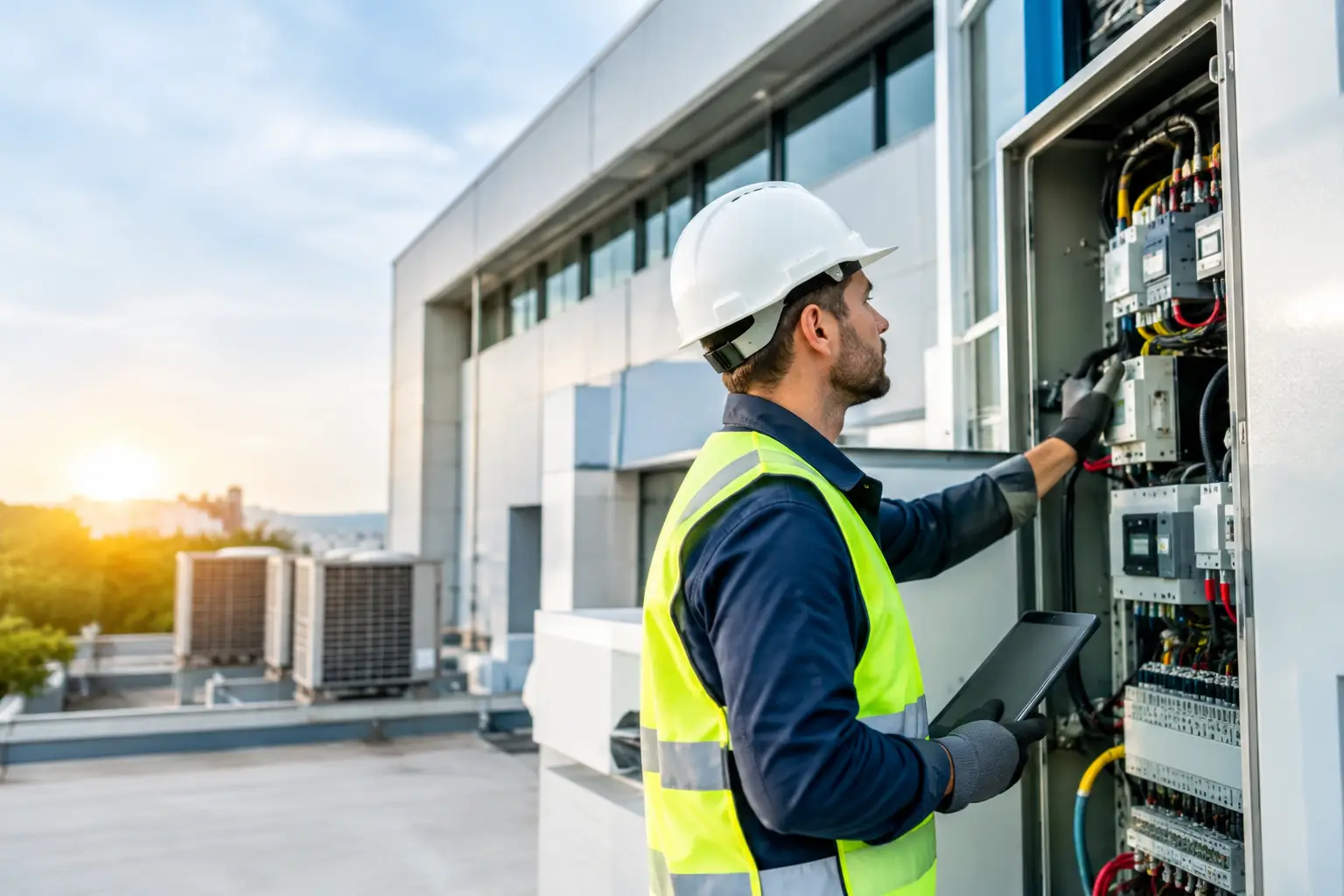
A professional assessment adds value beyond utility-bill review. It can identify air leakage, insulation gaps, duct losses, inefficient equipment, ventilation problems, and control settings that do not match actual occupancy. This prevents a common mistake: replacing equipment before correcting the conditions that make it work harder than necessary.
Improve HVAC Efficiency First
Heating and cooling are often the largest controllable energy loads in an apartment building. Aging package units, heat pumps, furnaces, boilers, and central cooling systems can consume excessive energy long before they stop working completely.
Maintain Equipment Before Replacing It
Routine HVAC maintenance delivers immediate value. Dirty filters, blocked coils, refrigerant issues, failing motors, and neglected combustion equipment reduce efficiency and can create comfort complaints that lead residents to use supplemental space heaters or window air conditioners.
Maintenance should include checking filters, coils, belts, drains, electrical connections, refrigerant charge where applicable, airflow, and thermostat operation. In central systems, confirm that pumps, fans, and boilers are not operating unnecessarily during low-demand periods.
Replace High-Use, Underperforming Systems
When equipment is near the end of its useful life, replacement may produce more meaningful savings than repeated repairs. High-efficiency heat pumps can be an effective option in many climates, while properly sized central equipment and variable-speed components can reduce waste in larger multifamily applications.
The trade-off is capital cost. A lower-priced replacement may solve an immediate failure but miss years of potential operating savings. Evaluate lifecycle cost, expected run hours, maintenance needs, available utility incentives, and installation quality – not just equipment price.
Seal Air Leaks and Strengthen the Building Envelope
Conditioned air escaping through gaps around doors, windows, attic penetrations, plumbing openings, and ductwork forces HVAC systems to run longer. In multifamily buildings, leakage can also move odors, moisture, and pollutants between units and common areas.
Air sealing is often one of the most cost-effective measures because it supports nearly every other upgrade. A tighter building reduces heating and cooling demand, improves comfort near exterior walls and windows, and helps new HVAC equipment deliver its rated performance.
Insulation should be evaluated at the same time. Attics, roofs, exterior walls, floors above garages, and mechanical spaces are common areas of heat loss or heat gain. The best approach varies by building construction. An older garden-style community may benefit most from attic air sealing and insulation, while a mid-rise property may need attention around roofs, corridors, mechanical penetrations, or windows.
Do not treat air sealing as a reason to ignore ventilation. Tighter buildings need intentional ventilation strategies to maintain indoor air quality and manage moisture. The goal is controlled airflow, not simply less airflow.
Upgrade Lighting and Common-Area Controls
LED lighting remains a practical energy reduction measure for apartment properties, particularly in parking areas, breezeways, stairwells, laundry rooms, leasing offices, maintenance spaces, and exterior lighting. LEDs use less energy, last longer, and can reduce maintenance calls related to lamp replacement.
Controls make lighting upgrades more effective. Occupancy sensors work well in intermittently used spaces such as storage rooms, restrooms, and utility areas. Photocells and timers can prevent exterior lights from operating during daylight hours. In garages and corridors, bi-level controls can maintain safe baseline lighting while reducing output when no one is present.
Lighting must be designed around safety and resident experience. Overly aggressive sensor settings or insufficient exterior illumination can create complaints and liability concerns. A quality retrofit balances energy savings with visibility, security, code requirements, and the actual use of each space.
Reduce Water Heating Waste
Domestic hot water is a major energy expense in many apartment buildings, especially where it is centrally produced and owner-paid. Leaking fixtures, uninsulated pipes, poorly tuned recirculation systems, and outdated water heaters can steadily increase utility costs.
Start by inspecting for leaks in units and common areas. A small hot-water leak wastes both water and the energy used to heat it. Next, assess pipe insulation, storage-tank condition, temperature settings, and recirculation controls. A recirculation pump that runs continuously can consume energy around the clock, while a properly controlled system can provide timely hot water with less waste.
Low-flow showerheads and faucet aerators can reduce hot-water demand when selected carefully. Products should maintain adequate pressure and resident satisfaction. The cheapest fixture is not always the best choice if it creates negative feedback or leads residents to remove it.
Add Smart Controls Where They Solve a Real Problem
Smart thermostats, connected HVAC controls, submetering platforms, and energy-management systems can improve visibility and reduce unnecessary runtime. They are most valuable when the property team has a clear operating issue to solve.
For example, programmable controls can reduce conditioning in vacant units, leasing offices, clubhouses, and other spaces with predictable schedules. Central controls can flag unusual temperatures or equipment runtime before a small issue becomes a larger maintenance problem.
Technology alone does not guarantee savings. Poor installation, weak wireless connectivity, inadequate staff training, or settings that residents cannot understand can limit results. Controls should be commissioned, monitored, and adjusted after installation. The measure of success is not the number of connected devices. It is lower energy use with dependable comfort and operations.
Focus on Vacant Units and Turnover Work
Vacant apartments are often overlooked because they do not generate resident complaints. Yet cooling or heating an empty unit at occupied-unit settings can create unnecessary expense across a large portfolio.
Set reasonable vacancy temperature ranges that protect the unit from excessive heat, cold, or moisture while reducing HVAC runtime. During turnover, use the opportunity to seal penetrations, replace failed weatherstripping, repair duct connections, install efficient lighting, and address plumbing leaks. These small actions are easier and less disruptive when the unit is unoccupied.
For managers, the most effective process is to add energy checks to the standard turn checklist rather than treating them as separate projects. Consistency across every turnover can produce meaningful portfolio-wide gains over time.
Engage Residents Without Shifting the Burden
Residents influence apartment energy use through thermostat settings, lighting, appliance use, and reporting maintenance issues. Clear communication can help, especially when paired with upgrades that make efficient behavior easier.
Provide straightforward guidance on thermostat operation, filter access where residents are responsible, and how to report drafts, leaks, or equipment problems. Avoid messaging that makes residents feel blamed for high bills. If an apartment has an inefficient HVAC unit, substantial air leakage, or poor insulation, behavior tips will not solve the underlying issue.
For individually metered communities, resident education can complement building upgrades. For master-metered properties, it can reduce common waste and improve the return from capital improvements. In either case, comfort should remain the standard. Energy savings that come from uncomfortable units are not sustainable savings.
Build a Retrofit Plan Around Measurable Results
The strongest energy plans combine quick operational improvements with larger capital measures scheduled around equipment life cycles and budget timing. Maintenance, lighting controls, vacancy settings, and air sealing may offer near-term opportunities. HVAC replacement, insulation improvements, and hot-water system upgrades can be planned for deeper, lasting reductions.
For multifamily owners, the top ways to cut apartment energy costs should be evaluated as a building-performance strategy, not a collection of isolated products. Performance Energy helps property stakeholders identify the measures that fit their buildings, implement upgrades correctly, and focus on measurable reductions in consumption and cost.
A well-targeted retrofit does more than lower a utility bill. It gives owners better control of operating expenses, provides residents with more comfortable homes, and helps the property perform reliably long after the initial work is complete.