
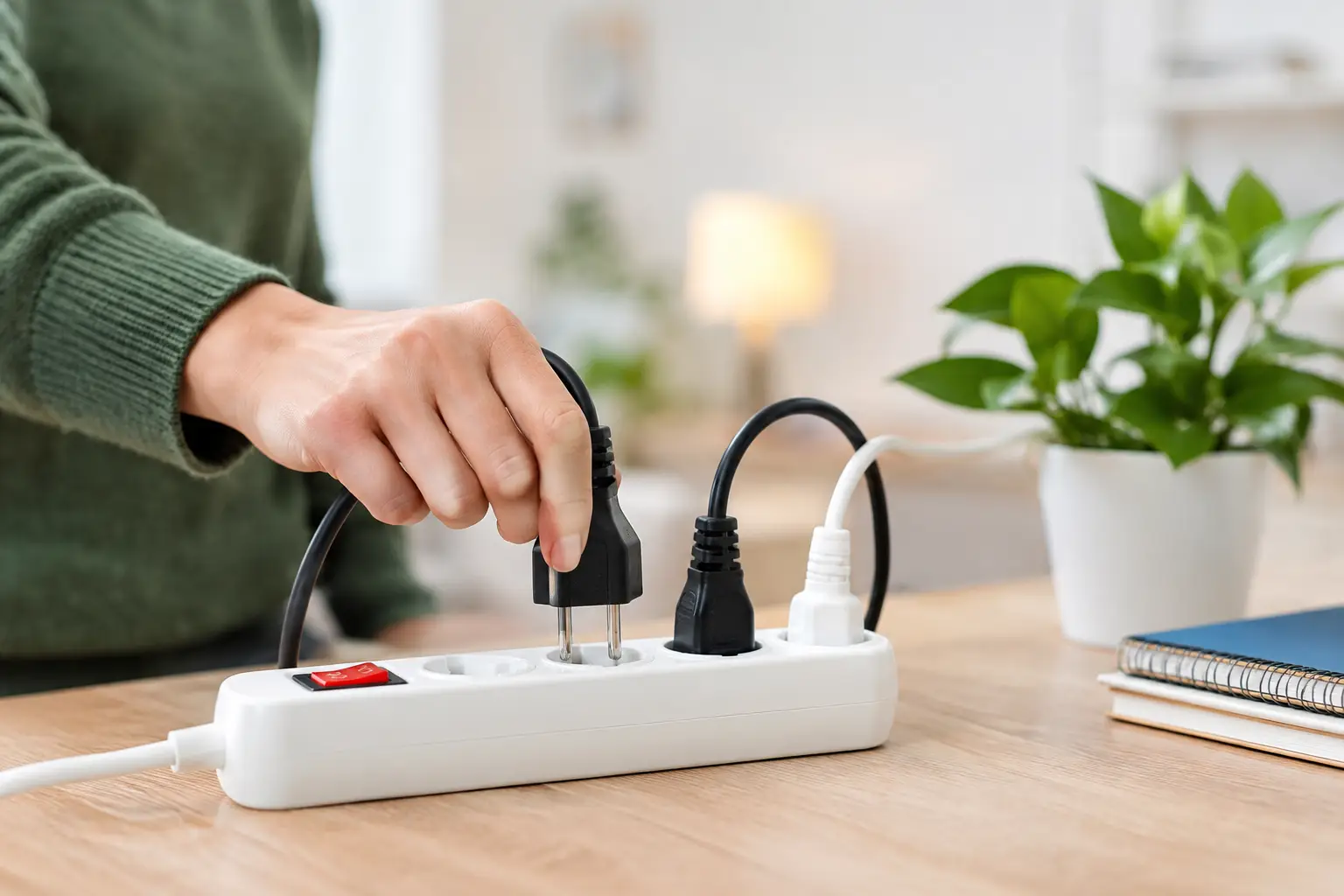
A cable box displaying the time, a television waiting for a remote command, and chargers left plugged in may seem insignificant. Across a home or apartment community, those small loads add up every hour they are not actively serving anyone. Learning how to reduce standby power is a practical way to lower electricity use without changing comfort, occupancy, or daily operations.
Standby power is not usually the largest energy issue in a building. Heating, cooling, water heating, and major appliances often deserve attention first. But standby loads are persistent, easy to overlook, and often simple to control. For homeowners, that can mean fewer avoidable charges on the monthly bill. For multifamily operators and utility program partners, it can support measurable savings at scale when paired with targeted retrofit work.
What standby power looks like in real buildings
Standby power, sometimes called vampire load or phantom load, is electricity consumed when equipment is switched off, idle, or waiting for a signal. The device is not doing its main job, but it is still drawing power for displays, clocks, sensors, memory, network connectivity, or remote-start features.
Common examples include televisions and streaming devices, gaming consoles, printers, cable or satellite boxes, coffee makers with digital clocks, microwave displays, smart speakers, chargers, and office equipment. In common areas, the list can extend to vending machines, AV equipment, copier stations, fitness equipment, and security-related devices.
Not every always-on device is wasteful. Internet equipment, security systems, medical equipment, refrigeration, smart thermostats, and building controls may need continuous power to operate reliably. The goal is not to unplug equipment indiscriminately. It is to identify loads that deliver little value while idle, then choose controls that preserve the service residents, staff, and owners depend on.
Why standby loads deserve attention
A single device using a few watts may have little effect on one day’s bill. The cost changes when that device runs 24 hours a day, 365 days a year, and when dozens or hundreds of similar devices are present. The same principle matters in multifamily properties, where units, leasing offices, clubhouses, laundry rooms, and maintenance spaces can each contain avoidable plug loads.
Standby power also affects more than annual energy consumption. It creates a steady base load that can make a building’s energy profile harder to manage. For utilities and implementation partners, reducing unnecessary always-on usage can complement demand-side management goals, especially when solutions are deployed consistently across a large participant base.
The strongest approach treats plug loads as part of a complete building-performance strategy. Air sealing, insulation, HVAC efficiency, lighting, and water-heating improvements typically produce larger savings opportunities. Yet standby reduction can be a cost-effective supporting measure, particularly when equipment is aging, spaces are being renovated, or residents are already receiving energy-efficiency education.
How to reduce standby power at home
Start with the equipment that is used occasionally but stays energized all the time. Entertainment centers and home offices are usually the best places to look. A power strip with an easy-to-reach switch can shut off several devices at once when they are not needed. Advanced power strips can also turn off peripheral equipment automatically when a primary device, such as a television or computer, is switched off.
Before using a strip, consider what each device needs. A modem or router may need to remain powered for internet access, smart-home functions, or security monitoring. A game console may need standby mode for updates, but settings often allow users to reduce its idle energy use while retaining key features. A printer that is used once a month does not need the same treatment as a device required for daily remote work.
Chargers are another straightforward target. Unplug chargers once phones, tools, or batteries are fully charged, particularly older adapters that may continue drawing small amounts of electricity. When replacing equipment, look beyond the purchase price. Energy-efficient electronics with well-designed sleep modes can reduce long-term operating costs without adding work for the household.
A plug-in energy monitor can help verify which devices are worth addressing. Measure a device in active use, sleep mode, and fully off mode. This replaces assumptions with actual data and prevents time from being spent on loads that are too small to materially affect the bill.
Reduce standby power in multifamily properties
Multifamily properties require a broader view because responsibility for equipment is split between management, staff, and residents. Owners and managers should begin with common-area and operational equipment they directly control. Leasing offices, business centers, fitness rooms, community spaces, maintenance shops, and vacant units are logical starting points.
Office and amenity spaces often contain clusters of electronics that remain on overnight. Establishing shutdown settings for monitors, printers, displays, and AV systems can reduce waste without disrupting staff. Timers and occupancy-based controls may be appropriate for certain equipment, but they should be selected carefully. Devices that support life safety, security, access control, communications, or property operations should remain outside automatic shutdown plans unless a qualified professional confirms otherwise.
Vacant units offer another opportunity. Appliances and HVAC systems must be managed to protect the property, prevent moisture problems, and prepare for turnover. However, televisions, chargers, countertop appliances, and other nonessential plug loads can be disconnected during vacancy. A standardized turnover checklist helps maintenance teams apply the same practices consistently.
Resident engagement can support savings, but it should be practical rather than burdensome. Clear guidance about using switched power strips, adjusting device sleep settings, and unplugging unused chargers gives residents useful options. For properties participating in efficiency programs, education works best when it accompanies installed measures and simple instructions, not when it shifts all responsibility to residents.
A practical process for finding idle loads
The most effective standby reduction plans are based on observation, measurement, and operational fit. Use this four-step process:
- Walk the property or home during low-activity periods and note equipment with lights, clocks, displays, or warm power adapters.
- Separate essential continuous loads from equipment that can be switched off, scheduled, or placed in a lower-power mode.
- Measure priority devices when possible, then calculate which groups of devices create meaningful annual usage.
- Assign controls and accountability, whether that means a resident-facing power strip, an office shutdown procedure, or a maintenance checklist.
The last step is where many efforts stall. A device may be technically capable of shutting down, but the measure will not persist if it interferes with staff routines or tenant expectations. The best solution is the one that saves energy repeatedly with minimal friction.
Where professional assessment adds value
Standby power is easy to discuss in isolation, but building performance is interconnected. A property with high base loads may also have inefficient lighting, improperly operating HVAC equipment, air leakage, or controls that are not configured for actual occupancy. Addressing only the most visible plug loads can leave larger savings on the table.
A qualified retrofit assessment identifies the measures that fit the building, budget, and program goals. For a homeowner, that can mean prioritizing upgrades with the clearest return and avoiding unnecessary purchases. For a multifamily owner, it means aligning unit-level measures, common-area improvements, and operational controls into a plan that supports lower utility costs and asset performance.
For utility and energy implementation organizations, consistent field execution and verified results matter as much as the measure itself. Performance Energy applies specialized building and energy expertise to help participants identify practical upgrades and deliver measurable efficiency outcomes.
Make standby reduction part of everyday operations
The value of reducing standby power is not in chasing every last watt. It is in eliminating unnecessary energy use where it can be controlled reliably, then putting attention toward the upgrades that will have the greatest effect on cost and building performance. A few well-chosen controls, supported by a broader efficiency plan, can keep savings working long after the initial changes are made.