
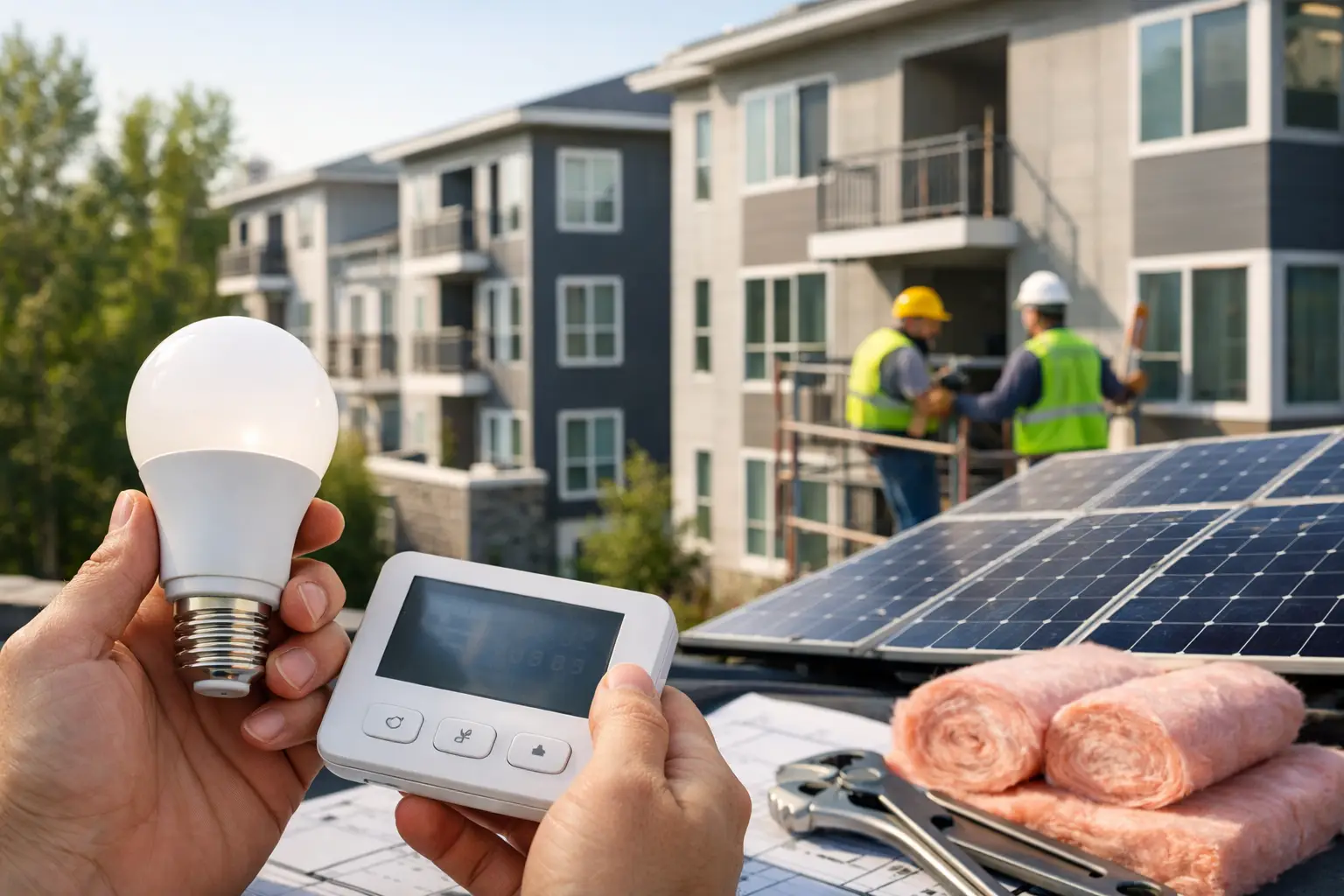
A 120-unit property can lose thousands of dollars each year through poorly controlled HVAC equipment, aging water heaters, air leakage, and common-area lighting that runs longer than necessary. The best multifamily retrofit measures address those losses in the right order, turning utility data and building conditions into lower operating costs, improved resident comfort, and measurable performance gains.
For owners, managers, and utility program partners, the goal is not to install the most upgrades. It is to identify the measures that produce dependable savings for the specific building, climate, occupancy pattern, and utility rate structure. A well-planned retrofit also minimizes disruption for residents and protects the long-term value of the property.
Start With Building Data, Not a Product List
Multifamily buildings are complex operating systems. A measure that performs well in a garden-style community with individual HVAC systems may not deliver the same return in a high-rise with central plant equipment. Before selecting upgrades, review at least 12 months of utility bills, interval data where available, equipment age, maintenance history, resident comfort complaints, and occupancy trends.
An on-site assessment should verify how the building actually operates. Thermostats may be set differently than policy requires. Exhaust fans may run continuously. Domestic hot water recirculation may operate around the clock even when demand is low. These details determine where savings are available and which improvements can be measured with confidence.
The strongest retrofit plans sequence measures logically. Building envelope and airflow issues should be addressed before major HVAC sizing decisions. Controls should be calibrated after new equipment is installed. This approach avoids paying for oversized systems or missing savings because new equipment is operating under old settings.
The Best Multifamily Retrofit Measures by Impact
High-efficiency HVAC upgrades and controls
Heating and cooling are often the largest controllable energy expense in apartment buildings, particularly where systems are aging, improperly maintained, or operated without effective controls. Replacing failing equipment with high-efficiency heat pumps, variable-speed systems, or properly selected central equipment can substantially reduce energy use. The right choice depends on the existing infrastructure, local climate, electrical capacity, and whether units are individually or centrally served.
Controls frequently provide an earlier and lower-cost opportunity. Programmable thermostats, occupancy-aware settings in common areas, optimized start and stop schedules, and preventive maintenance controls help equipment run only when needed. In centrally served properties, controls for boilers, chillers, pumps, and ventilation equipment can reduce waste without compromising comfort.
There is a trade-off: equipment replacement may deliver large long-term savings, but it requires capital planning and careful installation coordination. Controls and commissioning can often produce faster savings, especially when equipment is still serviceable but operating inefficiently.
Air sealing, insulation, and ventilation balance
Envelope improvements are among the most durable multifamily efficiency investments because they reduce the heating and cooling load year after year. Common problem areas include attic penetrations, rim joists, exterior wall gaps, leaky windows and doors, ductwork outside conditioned space, and unsealed utility openings.
Air sealing should be paired with a ventilation strategy. Tightening a building without evaluating exhaust, fresh air, and pressure balance can create moisture or indoor air quality concerns. The objective is controlled airflow, not simply less airflow. In unit-by-unit buildings, this may mean sealing leakage pathways while confirming bathroom and kitchen exhaust systems are operating correctly.
Insulation can be highly effective where existing levels are inadequate, especially in attics, roofs, and accessible wall cavities. It may be less cost-effective when major demolition is required or when the building’s larger losses come from mechanical systems. Assessment data should guide the decision rather than a blanket assumption that more insulation is always the first priority.
Domestic hot water improvements
Hot water is a major expense in many multifamily properties because demand is frequent, systems operate continuously, and distribution losses can be significant. Central systems with aging boilers or storage tanks deserve particular attention. High-efficiency water heating equipment, heat pump water heaters where site conditions support them, and right-sized storage can lower energy consumption while maintaining reliable service.
Distribution upgrades matter as much as the heat source. Insulating hot water piping, repairing leaks, balancing recirculation loops, and adding demand-based recirculation controls can reduce standby losses. A pump that runs 24 hours a day regardless of demand is a common and avoidable source of waste.
Water-saving fixtures can strengthen these savings. Efficient showerheads and faucet aerators reduce both water use and the energy needed to heat it. For properties with owner-paid water or central hot water, the combined utility benefit can be meaningful. Resident experience must remain part of the specification, so fixture selection should balance flow reduction with pressure and usability.
LED lighting and smart common-area controls
Lighting upgrades remain one of the most practical retrofit measures because they are straightforward to install, create immediate electric savings, and reduce maintenance demands. LED fixtures are especially effective in parking areas, corridors, stairwells, laundry rooms, leasing offices, amenity spaces, and exterior lighting.
The larger opportunity is often lighting controls. Occupancy sensors, daylight harvesting, photocells, and scheduling prevent lights from operating at full output when spaces are empty or daylight is sufficient. Stairwells and corridors require a thoughtful approach: bi-level lighting can preserve safety and visibility while reducing energy use during low-traffic periods.
Lighting is rarely the biggest energy load in every building, especially in properties with major heating or cooling needs. However, its short payback potential and low resident disruption make it a valuable early measure and a reliable component of a broader retrofit plan.
Appliances, in-unit equipment, and load management
When a property owner provides appliances, efficient refrigerators, dishwashers, laundry equipment, and through-wall HVAC units can lower unit-level consumption across an entire portfolio. Replacement timing matters. Swapping out working equipment too early may not always produce the best financial return, while targeting the oldest, highest-use, or most failure-prone units can improve economics.
For electrically constrained properties, load management may be essential. Smart thermostats, water heating controls, and managed charging strategies can reduce peak demand without asking residents to sacrifice comfort. This is particularly relevant for utility partners and owners facing demand charges or preparing for electrification.
Measure Savings and Protect Performance
A retrofit is only as strong as its delivered results. Establish a baseline before work begins, then track energy use after installation with adjustments for weather, occupancy, and major operational changes. Utility data should be reviewed alongside maintenance records and resident feedback. A sudden drop in energy use is valuable, but not if it coincides with unresolved comfort complaints or equipment reliability issues.
Commissioning is a critical step after installation. Equipment needs to be verified, controls need to be programmed correctly, and operations staff need clear guidance on what has changed. Without this follow-through, even high-quality equipment can drift away from expected performance.
For utility and energy implementation programs, consistent documentation is equally important. Site conditions, installed measures, quality checks, and savings assumptions should support clear reporting and scalable program delivery. Performance Energy approaches retrofits with this accountability in mind: the work must produce results that owners, managers, and program stakeholders can see and verify.
Build a Retrofit Plan Around Capital Timing
The best plan often combines quick-return measures with larger capital improvements. LED lighting, controls, air sealing, and water conservation upgrades may be completed quickly. HVAC replacements, roof-related insulation work, electrical upgrades, and central hot water modernization may align better with reserve planning, equipment end of life, or scheduled renovations.
This phased approach keeps momentum moving while helping owners avoid reactive replacements. It also creates better decision-making data. Early projects can reveal operating issues, reduce baseline consumption, and clarify the expected value of later investments.
The right next step is a property-specific assessment that identifies where energy is being lost, what can be corrected now, and which capital measures deserve a place in the long-term plan. When retrofit decisions are tied to verified building conditions and clear performance targets, lower utility costs become an operating result rather than a hopeful estimate.