A high utility bill rarely comes from one obvious problem. It is usually the combined effect of air leaks, poorly performing insulation, aging equipment, duct losses, and operating habits that force a home to use more energy than it should. A home energy assessment review helps separate meaningful findings from generic recommendations, so homeowners can invest in improvements that lower costs and improve comfort.
For property managers and utility program partners, the same principle applies at a larger scale. The value of an assessment is not the report itself. It is a clear, accurate path to measurable energy reduction, practical implementation, and results that can be verified.
What a Home Energy Assessment Should Evaluate
A credible assessment looks at the home as a connected system. Heating and cooling equipment, insulation, windows, ducts, ventilation, appliances, and occupant behavior all affect one another. Replacing a single component without understanding that relationship can leave savings on the table.
The process should begin with the building envelope. This includes the walls, attic, floors, doors, windows, and areas where outside air enters or conditioned air escapes. Air leakage can make rooms feel drafty in winter, hot in summer, and difficult to maintain at a consistent temperature. It also increases the workload on HVAC equipment.
The assessment should also evaluate insulation levels and placement. Insulation is not simply a matter of adding more material. Gaps, compression, moisture exposure, and poor air sealing can reduce its performance. An attic with adequate insulation but significant air leaks at recessed lights, plumbing penetrations, or top plates may still waste substantial energy.
Heating, cooling, and water-heating systems deserve equal attention. An assessment should identify the equipment’s age, condition, efficiency rating, sizing, and operating pattern. It should also consider whether ducts are leaking, disconnected, undersized, or routed through unconditioned spaces. A high-efficiency HVAC system cannot deliver expected savings if it is serving a leaky building or losing conditioned air in the attic.
How to Read a Home Energy Assessment Review
The strongest home energy assessment review does more than say a property could be more efficient. It explains where energy is being lost, how each issue affects bills and comfort, and which upgrades should be completed first.
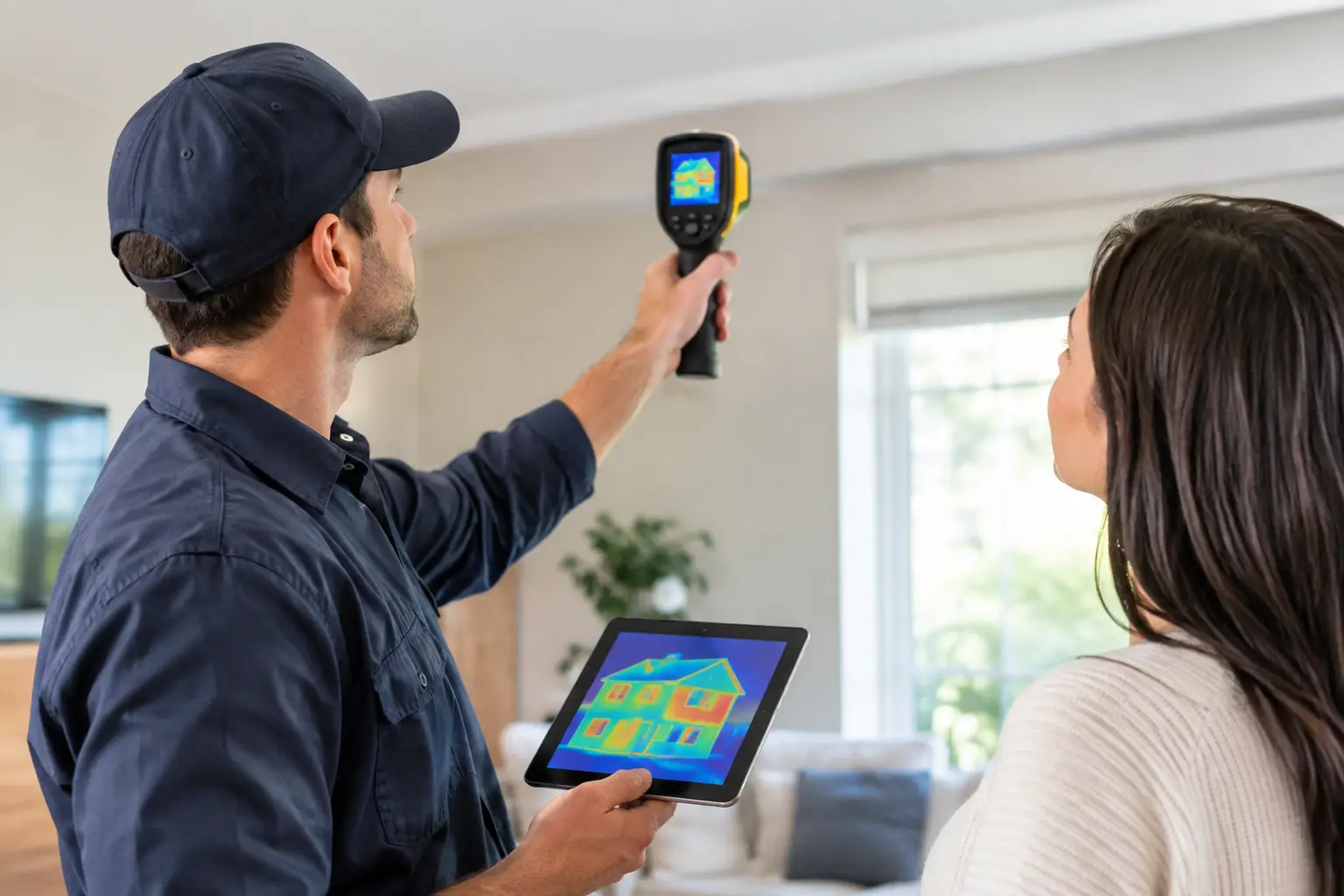
Look for findings that are supported by diagnostics rather than visual observations alone. Depending on the property and service scope, useful testing may include blower door testing for air leakage, infrared imaging to identify insulation gaps, duct testing, combustion safety testing, and utility-bill analysis. These tools help turn a broad concern such as “high bills” into a specific, solvable performance issue.
Recommendations should be prioritized by impact, cost, and sequencing. For example, air sealing and insulation often make sense before installing new heating and cooling equipment because they reduce the amount of heating and cooling the home needs. Addressing duct leakage may also improve the performance of existing equipment enough to delay a replacement decision.
A good report should be understandable without minimizing the technical details. Homeowners need plain answers: What is causing the problem? What improvement will address it? What is the likely benefit? What should happen first? Property owners and program stakeholders may also need projected energy savings, cost estimates, implementation schedules, and documentation that supports program requirements.
Recommendations That Deserve a Closer Look
Not every recommendation carries the same value. Some improvements offer dependable results when they are properly installed and verified. Others may be appropriate only under certain conditions.
Air sealing is often one of the highest-value measures because it can reduce unwanted heat gain and heat loss while improving comfort. However, tightening a home without evaluating ventilation and combustion safety can create indoor air quality concerns. The right approach improves control of air movement while ensuring the home still has safe, appropriate ventilation.
Insulation upgrades can be highly effective, especially in attics, crawlspaces, and exterior walls with known deficiencies. The expected benefit depends on climate, existing insulation, access, moisture conditions, and whether air leaks are corrected first. Simply adding insulation over unresolved moisture or ventilation problems is not a long-term solution.
Window replacement is another area where expectations should be realistic. New windows can improve comfort, reduce drafts, and address deteriorated frames or failed seals. But in many homes, comprehensive window replacement has a longer payback period than air sealing, attic insulation, duct repair, or HVAC controls. The best recommendation considers the building’s actual needs rather than promoting the most visible upgrade.
Equipment replacement may be necessary when systems are near the end of their service life, require frequent repairs, or operate inefficiently. Still, replacement should be based on proper load calculations and building conditions. Oversized equipment can short-cycle, reduce comfort, and waste energy, even if it has a high efficiency rating.
What Results Should You Expect?
Savings depend on the home, the climate, existing conditions, utility rates, and the scope of work. A responsible assessment should avoid promising a single savings percentage before evaluating the property. Homes with serious air leakage, poor attic insulation, duct losses, or outdated equipment may have significant opportunities. A newer, well-maintained home may benefit more from targeted adjustments and controls.
Comfort is often the most immediate result. Rooms that were consistently too warm, too cold, humid, or drafty can become more stable when the building envelope and HVAC system work together. Lower energy use follows when the home does not have to compensate for preventable losses.
For multi-family properties, assessment findings should be organized around building-level and unit-level opportunities. Common-area lighting, central water heating, corridor ventilation, rooftop equipment, and envelope improvements may affect operating expenses across the property. In-unit measures can reduce tenant utility burdens and comfort complaints, but they require a coordinated approach that accounts for access, turnover, and installation quality.
Utility and energy program partners need another layer of accountability: documented savings, consistent field processes, and scalable implementation. An assessment framework should support measure eligibility, quality assurance, customer communication, and post-installation verification. That is how energy efficiency programs move from individual projects to dependable demand reduction outcomes.
Questions to Ask Before Approving Upgrades
Before moving ahead, ask whether the recommendations are based on testing, whether the work is prioritized in the right order, and how results will be verified after installation. Also ask who is responsible for correcting issues if the expected performance is not achieved.
The answers reveal whether you are receiving a product proposal or a building-performance plan. A contractor focused only on equipment may overlook envelope and duct problems. A contractor focused only on insulation may not fully address HVAC sizing, ventilation, or system controls. Effective retrofit work coordinates the measures that matter most to the building.
It is also reasonable to ask for a clear scope of work. It should identify materials, installation areas, testing procedures, expected outcomes, and any conditions that could affect results. This clarity protects the homeowner or property owner and gives program partners the documentation needed for quality control.
Performance Energy approaches assessments and retrofit planning with this outcome-driven mindset. The objective is not to sell the longest list of upgrades. It is to identify the measures that will reduce energy use, control costs, and improve building performance with results that can be measured.
Turn Findings Into Measurable Improvements
An assessment only creates value when its findings lead to properly designed and installed work. Prioritize the measures with the clearest impact, address safety and moisture issues before efficiency work, and verify performance when the project is complete. That final step matters because quality installation is what turns an energy recommendation into lower bills, better comfort, and lasting building performance.