Older homes have character. They also tend to have high utility bills, uneven temperatures, and mechanical systems working harder than they should. If you are figuring out how to retrofit an older house, the goal is not to replace everything at once. The goal is to make targeted improvements that reduce energy waste, improve comfort, and protect the value of the property.
That matters whether you own a single-family home, manage a small apartment building, or oversee a larger multi-family portfolio. The best retrofit plans are built around measurable performance, not guesswork. A house from the 1940s, 1970s, or 1990s can all benefit from upgrades, but the right path depends on how the building actually performs today.
How to retrofit an older house starts with the building, not the equipment
One of the most common mistakes is replacing a furnace or air conditioner before addressing the building envelope. It feels logical to start with the mechanical system because it is easy to see and easy to price. In practice, that can lock in inefficiency.
If a house leaks air through the attic, crawl space, ductwork, and wall penetrations, a new HVAC unit may still struggle to keep temperatures consistent. In some cases, owners end up paying for oversized equipment because the structure was never tightened first. That means higher upfront costs and weaker long-term results.
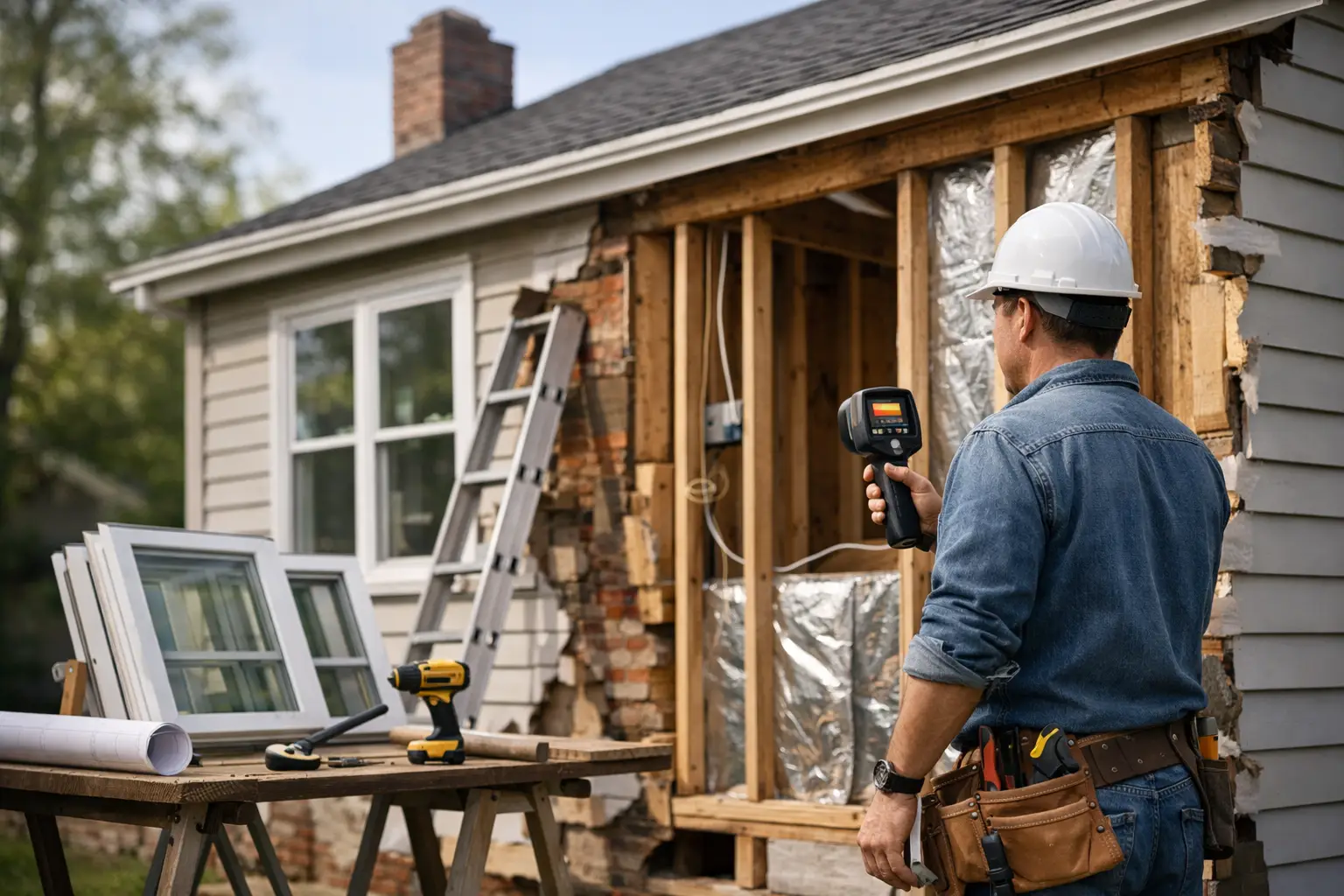
A better approach starts with an assessment. That usually includes insulation levels, air leakage, duct losses, appliance and lighting loads, moisture conditions, and the age and condition of major systems. For multi-family properties, the process should also look at common areas, unit turnover patterns, and opportunities to scale improvements across similar floor plans.
Focus first on the upgrades that stop energy loss
In most older houses, the biggest savings come from reducing waste before adding new technology. That usually means air sealing and insulation.
Attics are often the first place to look. Many older homes have too little insulation, poorly sealed access points, and open penetrations around wiring, plumbing, and recessed fixtures. Warm or cool air escapes there every day, forcing heating and cooling systems to run longer. Proper attic air sealing and insulation can improve comfort quickly, especially in homes with hot second floors or cold winter drafts.
Crawl spaces and basements can be just as important. An older house may have exposed ductwork, uninsulated rim joists, or moisture issues that make the whole building less efficient. In some homes, floors feel cold not because the furnace is failing, but because outside air is entering below the living space.
Walls are more complicated. Adding wall insulation can help, but the value depends on construction type, existing cavity conditions, and finish materials. It is not always the first or most cost-effective move. That is why retrofit work needs to be prioritized, not just bundled into a wish list.
Windows deserve a realistic look. Homeowners often assume they are the main problem because they are visible. Sometimes they are. But in many older homes, air sealing and attic work deliver better savings per dollar than full window replacement. If windows are failing, unsafe, or creating major comfort issues, replacement can make sense. If they are simply older, the better investment may be elsewhere first.
Mechanical upgrades should follow load reduction
Once the home is wasting less energy, it becomes easier to choose the right HVAC improvements. This is where many retrofit projects either gain efficiency or lose it.
After air sealing and insulation, the house may no longer need the same size heating and cooling system. That can open the door to a properly sized high-efficiency heat pump, upgraded furnace, or improved air distribution strategy. In multi-family settings, it can also help standardize equipment choices and reduce maintenance costs across units.
Ductwork should not be ignored. Leaky ducts in attics, garages, or crawl spaces can erase a large share of the benefit from new equipment. Sealing and insulating ducts often produces immediate gains in comfort and system performance. In older homes, airflow balancing can matter just as much as equipment efficiency ratings.
Water heating is another strong retrofit opportunity. Older tank water heaters can consume more energy than owners realize, especially in buildings with high occupancy or shared systems. Depending on the property, a heat pump water heater, better pipe insulation, or system controls may offer strong returns.
Lighting and appliances are usually not the biggest drivers, but they are often easy wins. Efficient lighting, updated ventilation fans, and ENERGY STAR appliances can support broader savings, especially in rental properties where every recurring cost matters.
How to retrofit an older house without creating new problems
Retrofit work should improve building performance, not just reduce one line item on a utility bill. Older homes need careful planning because one upgrade can affect another.
Air sealing a home without addressing ventilation can trap humidity and indoor pollutants. Adding insulation without managing moisture can create durability issues. Replacing HVAC equipment without evaluating duct conditions can leave tenants or homeowners with the same comfort complaints they had before.
This is why retrofit projects should be treated as whole-building improvements. The building envelope, mechanical systems, indoor air quality, and occupant use patterns all interact. What works well in one property may not be right for another, even if the buildings were constructed in the same decade.
For property managers, that whole-building view is especially important. A low-cost fix repeated across dozens of units can still be the wrong decision if it does not hold up operationally. Durable measures, consistent installation standards, and verified results matter more than headline efficiency claims.
Budget, payback, and the reality of phased work
Many owners want to know the single best answer. In reality, how to retrofit an older house often comes down to budget, timing, and the condition of the property.
A phased retrofit is often the smartest route. If the roof is due for replacement soon, attic improvements can be coordinated around that work. If HVAC equipment is nearing the end of its life, envelope upgrades should happen before replacement so the next system is sized correctly. If a property is between tenants, that may be the right time to complete higher-impact unit upgrades with less disruption.
Not every measure has the same payback. Air sealing, insulation, duct sealing, and controls often perform well because they reduce waste directly. Window replacement, cosmetic upgrades, or premium equipment may have a longer payback unless there is an operational or comfort reason to move sooner.
For utility and program stakeholders, this is where retrofit quality matters. Savings targets are only meaningful if installation is consistent and outcomes can be measured. Estimated performance on paper is not the same as verified performance in the field.
What homeowners and property managers should expect from a retrofit partner
A retrofit contractor should do more than quote equipment. They should identify where the building is losing energy, explain which measures will produce the strongest return, and sequence the work in a way that makes sense.
For homeowners, that means clear recommendations tied to lower bills and improved comfort. For multi-family owners and operators, it means balancing savings, tenant impact, maintenance realities, and portfolio-level performance. For utility and implementation partners, it means dependable execution, reporting discipline, and real demand reduction.
This is where experience matters. Older homes rarely behave exactly as expected. Hidden bypasses, disconnected ducts, inconsistent insulation, and deferred maintenance are common. A technically informed retrofit plan accounts for those realities instead of selling a one-size-fits-all package.
Companies like Performance Energy are built around that outcome-driven approach, with retrofit work designed to deliver measurable savings rather than just upgraded components. That distinction matters when the objective is lower operating cost and reliable building performance, not just a shorter scope of work.
The smartest retrofit plan is the one built on evidence
If you are serious about how to retrofit an older house, start with data, not assumptions. Find out where energy is being lost, which systems are driving cost, and which improvements will produce the most meaningful results for your property type.
An older house does not need to become new construction to perform better. It needs the right improvements, in the right order, installed to a high standard. When that happens, you get more than efficiency. You get a property that is more comfortable to live in, less expensive to operate, and better prepared for the years ahead.