If your utility bills keep climbing but your building is not getting any more comfortable or productive, the problem is rarely just the rate you pay. More often, the building itself is wasting energy. That is where the question what is an energy retrofit starts to matter.
An energy retrofit is the process of improving an existing home, apartment building, or commercial property so it uses less energy to deliver the same or better performance. Instead of tearing a structure down and starting over, a retrofit upgrades the parts of the building that drive waste – insulation, air sealing, HVAC systems, lighting, water heating, controls, and other energy-related components. The goal is straightforward: reduce energy consumption, lower utility costs, and improve how the building operates.
For property owners, that can mean smaller monthly bills and fewer comfort complaints. For multifamily operators, it can mean better net operating income, stronger asset performance, and fewer maintenance issues tied to aging equipment. For utility and program partners, it means measurable demand reduction and efficiency outcomes at scale.
What is an energy retrofit in practical terms?
In practical terms, an energy retrofit is not one single product or one quick fix. It is a planned set of improvements based on how a building actually performs.
That distinction matters. Many buildings have already had pieces replaced over time – a newer rooftop unit here, LED lamps there, maybe extra insulation in one area. Those updates may help, but they do not automatically add up to a true retrofit. A real energy retrofit looks at the building as a system. It asks where energy is being lost, which upgrades will produce the best return, and how those measures will work together.
For example, replacing an HVAC system without addressing duct leakage or poor insulation can leave savings on the table. Installing better insulation without fixing air leakage can also limit results. The best retrofit strategies are coordinated, not random.
How an energy retrofit works
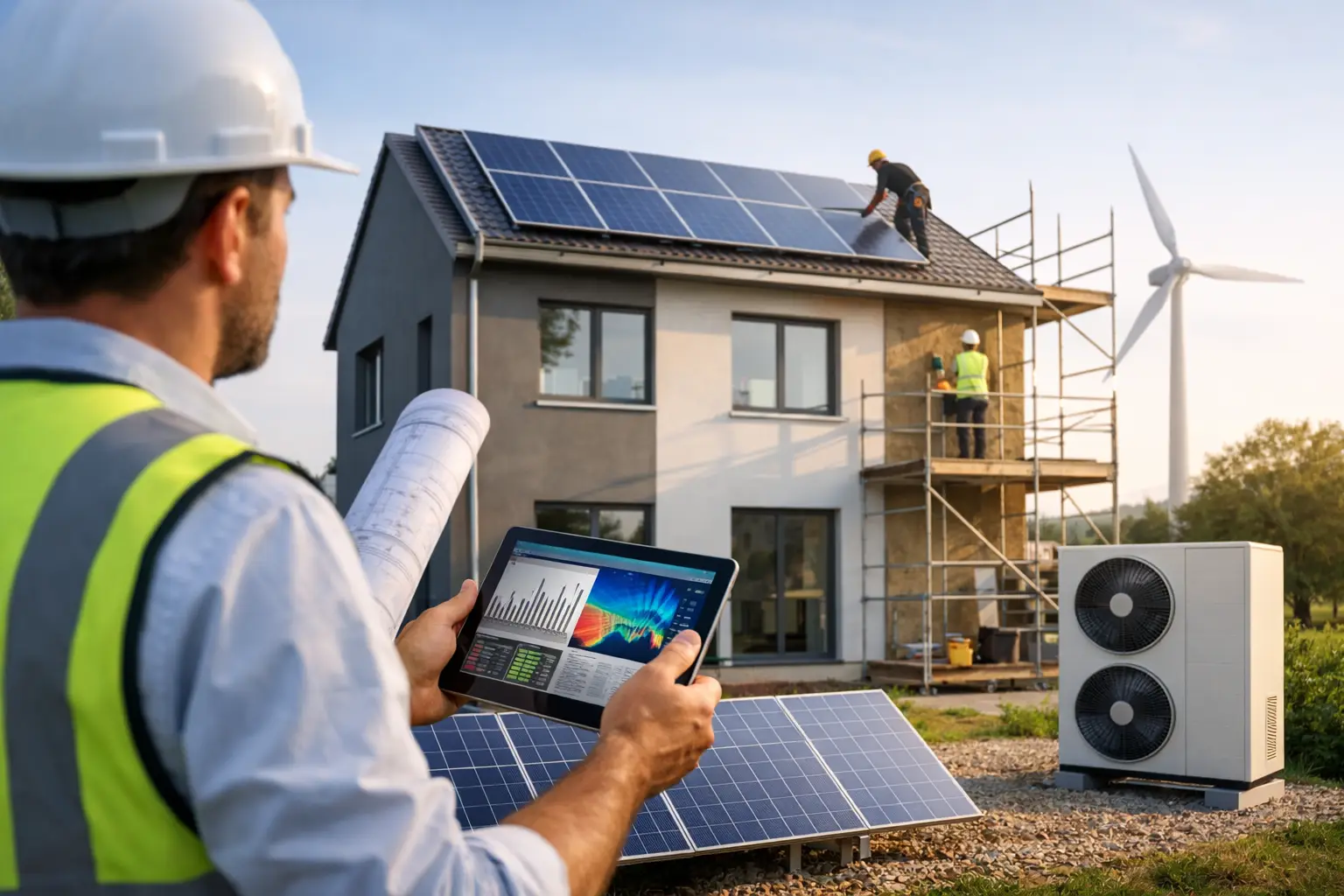
Most retrofit projects start with an assessment. That may include utility bill analysis, equipment review, site inspection, and testing to identify where energy is being wasted. In residential buildings, this often means finding air leaks, weak insulation levels, and inefficient heating or cooling equipment. In multifamily or larger properties, the review may also include central systems, common-area lighting, ventilation, controls, and domestic hot water systems.
From there, the building owner gets a scope of work based on likely impact. Some measures are low-cost and quick to implement. Others require more investment but deliver stronger long-term savings. The right mix depends on the building type, its current condition, energy rates, occupancy patterns, and the owner’s goals.
Once the work is completed, performance should be measured. That is an important point because retrofit success is not about checking boxes. It is about results. If the project is designed well, the building should use less energy, operate more reliably, and create a better indoor environment.
Common upgrades included in an energy retrofit
The exact measures vary, but most retrofits focus on the areas that drive the most waste. Building envelope improvements are often a major part of the job. That includes insulation, air sealing, window improvements, and duct sealing. These upgrades reduce heat gain and heat loss, which lowers the load on heating and cooling systems.
Mechanical system upgrades are another common piece. Older HVAC equipment, inefficient water heaters, and poorly tuned systems can consume far more energy than necessary. Replacing or optimizing them can deliver meaningful savings, especially when paired with envelope improvements.
Lighting and controls also matter, particularly in multifamily and commercial properties. LED upgrades, occupancy sensors, smart thermostats, and advanced controls can reduce unnecessary runtime and improve consistency.
In some buildings, appliances, ventilation systems, or renewable energy measures may also be part of the retrofit plan. But not every property needs every measure. The best retrofit is the one that fits the building and produces a clear, measurable outcome.
Why property owners invest in retrofits
The most obvious reason is cost. Energy waste shows up every month as avoidable utility expense. Over time, that waste can be substantial. A well-designed retrofit helps convert those recurring losses into recurring savings.
There is also the issue of comfort and occupant satisfaction. Drafty rooms, uneven temperatures, excessive humidity, and poor indoor air quality often trace back to the same performance issues that drive energy waste. A retrofit can improve comfort while reducing consumption, which is one reason these projects often create value beyond the utility bill.
For multifamily owners and managers, retrofits can also support occupancy, retention, and operational consistency. Buildings with fewer comfort issues and better-performing systems are easier to manage. When common areas, unit interiors, and central systems run more efficiently, owners often see benefits in both cost control and resident experience.
Utility and implementation partners look at retrofits from a broader system perspective. Existing buildings represent a major opportunity for demand-side management because they can often produce meaningful savings without the time and cost of new construction. Well-executed retrofit programs support grid goals, sustainability targets, and measurable program performance.
What is an energy retrofit not?
It is not just a remodel. A building can be renovated and still waste energy. Cosmetic improvements like new finishes or fixtures may improve appearance, but they do not necessarily improve performance.
It is also not simply equipment replacement on a one-for-one basis. Swapping out an old unit for a similar new one may solve an immediate maintenance problem, but it may not address the root causes of high energy use.
And it is not always a full-building overhaul. Some retrofits are comprehensive, while others are targeted. A homeowner may start with attic insulation, air sealing, and HVAC improvements. A multifamily operator may phase upgrades across buildings based on budget and operational priorities. The right approach depends on the opportunity and the expected return.
The trade-offs to understand
Energy retrofits are practical, but they are not one-size-fits-all. Upfront cost is the most common concern, and it is a valid one. Some measures pay back quickly, while others make more sense as part of a longer-term capital plan. That is why prioritization matters.
There can also be trade-offs between speed and depth. A basic retrofit with lighting and controls may be easy to execute, but it may not capture the larger savings available through envelope and mechanical improvements. On the other hand, a deeper retrofit usually requires more planning, more coordination, and higher initial investment.
Building age and condition also affect what is realistic. In older properties, deferred maintenance or hidden deficiencies can complicate the scope. In occupied multifamily buildings, tenant disruption has to be managed carefully. For utility programs, consistency, verification, and implementation quality become just as important as identifying savings opportunities.
This is why experience matters. The technical side of retrofitting is important, but so is execution. The best results come from a provider that understands diagnostics, installation quality, building science, and measurable performance.
Who benefits most from an energy retrofit?
Homeowners benefit when they want lower electricity bills, better comfort, and a clear path to improving an existing home without guessing which upgrades matter. A retrofit takes what can feel like a confusing set of options and turns it into a focused plan.
Multifamily owners and property managers benefit when they need to control operating costs and improve building performance across multiple units or common spaces. In these settings, even modest efficiency gains can add up quickly because the scale is larger.
Utility and energy program stakeholders benefit when they need reliable retrofit delivery that translates into verified savings. Program success depends on more than identifying eligible measures. It depends on implementation quality, consistency, and outcomes that hold up over time.
Why results should be the standard
Not all retrofit work produces the same outcome. The difference usually comes down to project design, installation quality, and follow-through. A low bid that skips diagnostics or treats the building as a collection of isolated parts can underperform. That leaves owners with higher costs than expected and savings below projections.
A stronger approach is outcome-driven. It starts with identifying where the losses are, recommending improvements that make sense, and completing the work to a high standard. For clients, that reduces uncertainty. For a company like Performance Energy, it also reflects the core value proposition: retrofit work should deliver measurable savings, not just a list of installed items.
If you are deciding whether a retrofit makes sense, the better question may be this: how much is your building already costing you through avoidable waste? Once that becomes clear, improving performance is not just an upgrade. It is a business decision with lasting impact.