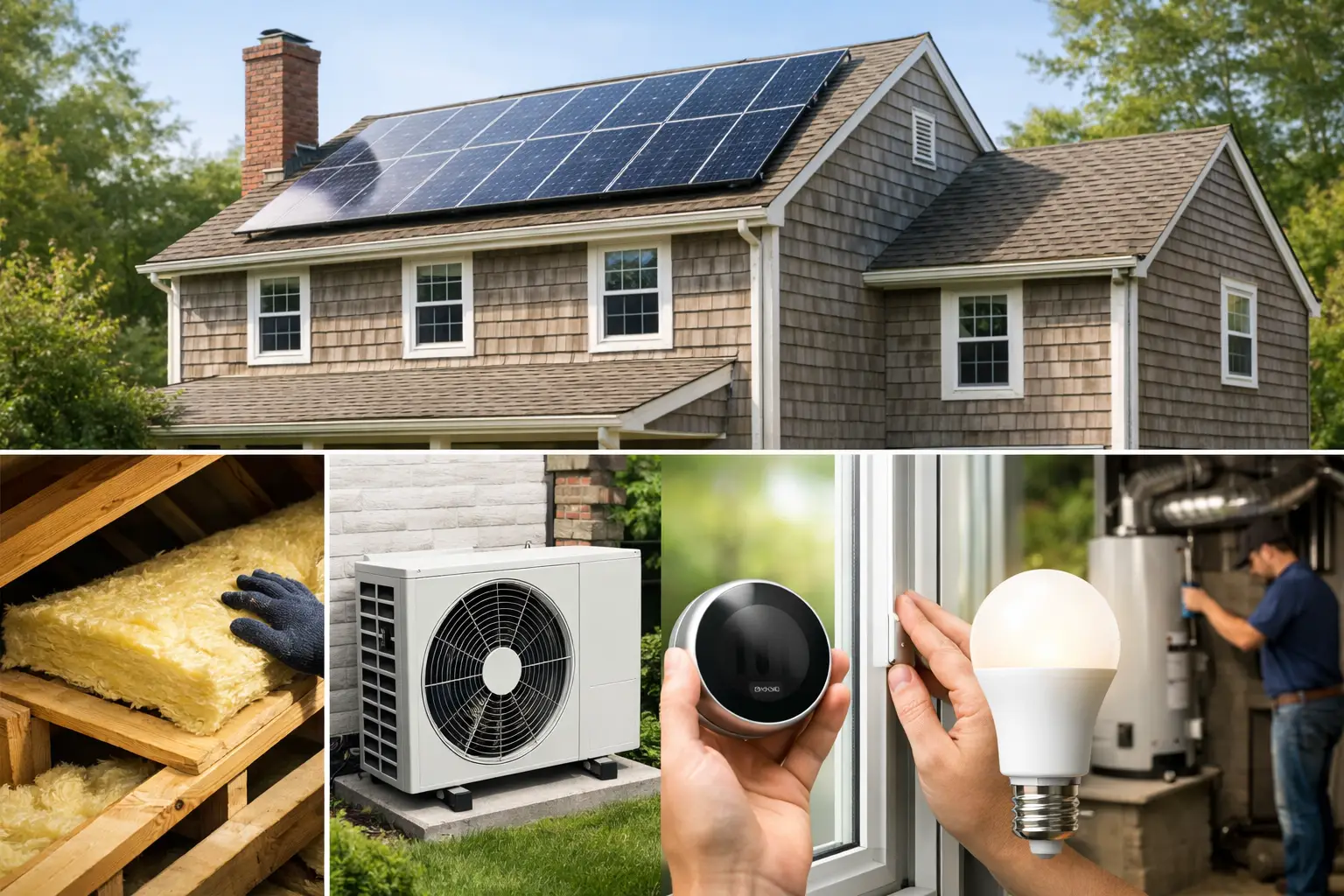
Older homes have character. They also have air leaks behind trim, under-insulated attics, aging HVAC systems, and utility bills that keep proving it. When people ask about the best energy upgrades for old homes, the right answer is rarely a single product. The biggest savings come from choosing upgrades in the right order, based on how the house actually performs.
That matters whether you own a drafty single-family home, manage a small apartment building, or oversee a larger multifamily property with rising operating costs. In older buildings, energy waste is usually cumulative. Heat escapes through the attic, outside air slips in through gaps, equipment works harder than it should, and residents pay for the inefficiency every month.
What makes old homes different
Old homes often lose energy in ways newer buildings do not. Construction methods changed over time, and many older properties were built before modern air sealing, insulation, and ventilation standards. Some have no wall insulation at all. Others have replacement equipment added over the years, but no one addressed the building envelope around it.
This is why one of the most common retrofit mistakes is replacing major equipment first and expecting dramatic savings. A new heating and cooling system can help, but if the building still leaks air and lacks insulation, the system may be oversized, underperforming, or simply forced to compensate for avoidable losses. Good retrofit work starts with the house, not just the hardware.
The best energy upgrades for old homes start with air sealing
If you only do one thing first, make it air sealing. In older homes, uncontrolled air movement is often one of the largest sources of waste. Gaps around attic penetrations, recessed lighting, plumbing openings, rim joists, windows, doors, and crawl spaces allow conditioned air to escape and outside air to enter.
Air sealing usually delivers fast value because it improves both efficiency and comfort. Rooms feel less drafty. Heating and cooling systems cycle more predictably. Humidity becomes easier to manage. In multifamily buildings, tightening the envelope can also reduce unit-to-unit air transfer, which helps with comfort and indoor air quality.
The trade-off is that air sealing should be done carefully. Older homes need to breathe in the right way, not leak in random places. Tightening a building without considering ventilation, combustion safety, or moisture movement can create new problems. That is why testing and building-level diagnostics matter.
Insulation is often the next best move
Once major leakage paths are addressed, insulation usually becomes much more effective. In old homes, the attic is often the highest-priority area because heat gain and heat loss through the roof assembly can be substantial. If the attic floor is under-insulated, or if insulation is uneven and compressed, the building pays for it year-round.
Wall insulation can also be valuable, but the return depends on the construction type, access, and climate. For some homes, dense-packing wall cavities makes sense. For others, the cost and disruption may not justify the savings compared with attic work, crawl space improvements, or duct sealing.
Basements and crawl spaces deserve more attention than they usually get. Exposed foundation walls, uninsulated floors, and air leakage at the rim joist can all drive comfort complaints and energy waste. In many older homes, fixing the lower part of the building has a surprisingly large impact on the upper floors.
HVAC replacement can be one of the best energy upgrades for old homes – if the timing is right
Heating and cooling equipment matters, but timing matters just as much. If an older furnace, air conditioner, or heat pump is near the end of its life, replacement may be necessary. The question is whether to replace it before or after envelope improvements.
In many cases, envelope upgrades should come first so the new system can be sized to the reduced load. Oversized systems are common in older homes and multifamily properties. They cost more upfront, can short-cycle, and often do a poorer job managing humidity and comfort.
High-efficiency heat pumps are now a strong option for many properties, especially where owners want lower operating costs and a path to electrification. But they are not automatically the right fit in every old building. Electrical capacity, duct design, climate, and the condition of the envelope all affect performance. The best result comes from matching equipment selection to measured building conditions, not marketing claims.
Duct sealing and distribution fixes are high-value upgrades
A good HVAC system can still waste energy if the air distribution system is leaking or poorly designed. In older homes, ducts may run through hot attics, vented crawl spaces, or unconditioned basements. Leaks at joints and connections can dump conditioned air where it does no good.
Duct sealing is often overlooked because it is not as visible as a new unit or new windows. Still, it can produce meaningful savings and noticeably better room-to-room comfort. For multifamily properties, distribution issues can also create persistent tenant complaints that owners mistakenly attribute to equipment failure.
Sometimes the fix is not just sealing. It may involve balancing airflow, correcting return pathways, or insulating ducts in unconditioned spaces. These are practical improvements that help existing systems perform the way they were supposed to in the first place.
Water heating upgrades can deliver steady savings
Old storage water heaters are often inefficient, especially if they are nearing replacement age. Upgrading to a high-efficiency unit can reduce energy use without major disruption. In some buildings, a heat pump water heater offers strong savings. In others, especially where installation conditions are tight or ambient temperatures are low, another high-efficiency option may be more suitable.
For multifamily buildings, domestic hot water can represent a significant operating expense. Central systems, recirculation losses, pipe insulation, and controls all affect total energy use. That is why water heating should be evaluated as part of the whole building, not as a standalone appliance decision.
Windows matter, but usually not first
Many owners assume replacement windows are the top upgrade for an old home. They can help, but they are often not the first place to spend money if the goal is maximum savings. Air sealing, attic insulation, duct improvements, and equipment upgrades usually deliver a better return per dollar.
That does not mean windows never make sense. If existing windows are failing, rotting, or creating major comfort issues, replacement may be justified. In some multifamily properties, window upgrades can also support noise control, occupant satisfaction, and maintenance goals. But if the current windows are structurally sound, weatherstripping and targeted sealing may solve a large part of the problem for less.
Lighting and controls are simple wins, especially at scale
Lighting upgrades are not the most dramatic retrofit story in a single-family home, but they are straightforward and dependable. LED lighting reduces consumption, lowers maintenance needs, and improves visibility. In multifamily common areas, parking areas, stairwells, and exterior spaces, the savings can add up quickly.
Controls make the upgrade stronger. Occupancy sensors, photocells, and scheduling reduce unnecessary runtime. For property managers, these are attractive improvements because they are relatively easy to implement and easy to verify in utility usage.
The right upgrade path depends on the property type
A homeowner usually wants lower bills, fewer hot and cold spots, and confidence that the work will pay off. A multifamily operator also needs predictable implementation, minimal disruption, and measurable savings across many units. Utility and program partners need scalable delivery and verified demand reduction.
The common thread is that no audience benefits from guesswork. The best retrofit strategy starts with an assessment of where the building is losing energy now. That includes envelope leakage, insulation levels, equipment efficiency, duct performance, ventilation, and occupant usage patterns. Once that baseline is clear, upgrades can be prioritized based on savings potential, budget, and operational constraints.
How to prioritize upgrades without wasting money
The most effective sequence is usually air sealing first, insulation second, then mechanical and distribution improvements as needed. After that, water heating, lighting, and controls can round out the plan. Windows move up the list when condition, comfort, or maintenance issues justify them.
There are exceptions. If the furnace has failed, replacement cannot wait. If an apartment property has dangerous combustion equipment or severe ventilation issues, those concerns come first. If moisture problems are present, they need to be addressed alongside efficiency work, not after.
This is where expert retrofit planning earns its value. A technically sound scope reduces the chance of spending heavily on upgrades that underdeliver. It also improves the odds of achieving measurable reductions in energy use, lower utility costs, and better building performance over time.
For owners who are serious about results, the smartest move is not chasing the most visible upgrade. It is choosing the upgrades that solve the biggest losses first, then building from there. Old homes can perform far better than many people expect when the work is guided by building science, field experience, and a clear standard for savings. That is the difference between a project that looks upgraded and one that actually performs.